
World Cricket
One Sport, Four Worlds: Without Format Context, No Cricket Analysis Holds
क्रिकेट में चार प्रमुख फॉर्मेट हैं — टेस्ट (5 दिन), वनडे (50 ओवर), टी20 (20 ओवर) और द हंड्रेड (100 गेंद)। हर फॉर्मेट की सफलता की परिभाषा और आँकड़ों की प्रासंगिकता अलग है: टेस्ट में औसत और टिककर, टी20 में स्ट्राइक रेट और इकॉनमी दर निर्णायक होती है। इसलिए किसी भी क्रिकेटर, टीम या मैच का विश्लेषण करने से पहले फॉर्मेट, मैदान और समय स्पष्ट होना अनिवार्य है। इनके बिना निकाला गया निष्कर्ष भ्रामक होता है, क्योंकि एक फॉर्मेट का मॉडल दूसरे पर लागू करना पद्धतिगत भूल है। साथ ही घरेलू-विदेशी प्रदर्शन का अंतर, छोटे नमूने की सीमा, चोट का इतिहास और लीग बनाम राष्ट्रीय टीम का अंतर भी विश्लेषण में शामिल होना चाहिए।
Cricket is one of the few sports in the world where four distinct games run under a single name. Test cricket is five days, four innings and long patience. One-day cricket is fifty overs, with a new ball from each end and the middle overs the hardest passage to control. T20 is twenty overs, where every ball demands risk and the last five overs decide the match. And The Hundred is a hundred-ball experiment, bowled in five-ball sets, with fielding restrictions for the first twenty-five balls.
That variety is not a matter of taste; it is the foundation of the entire analytical method. Before assessing any cricketer or team, it is essential to know which format is being discussed. If that is unsettled, every conclusion remains incomplete. Applying T20 logic to a Test, or Test logic to a T20, are equal and opposite errors, and this is the most common lapse in cricket analysis.
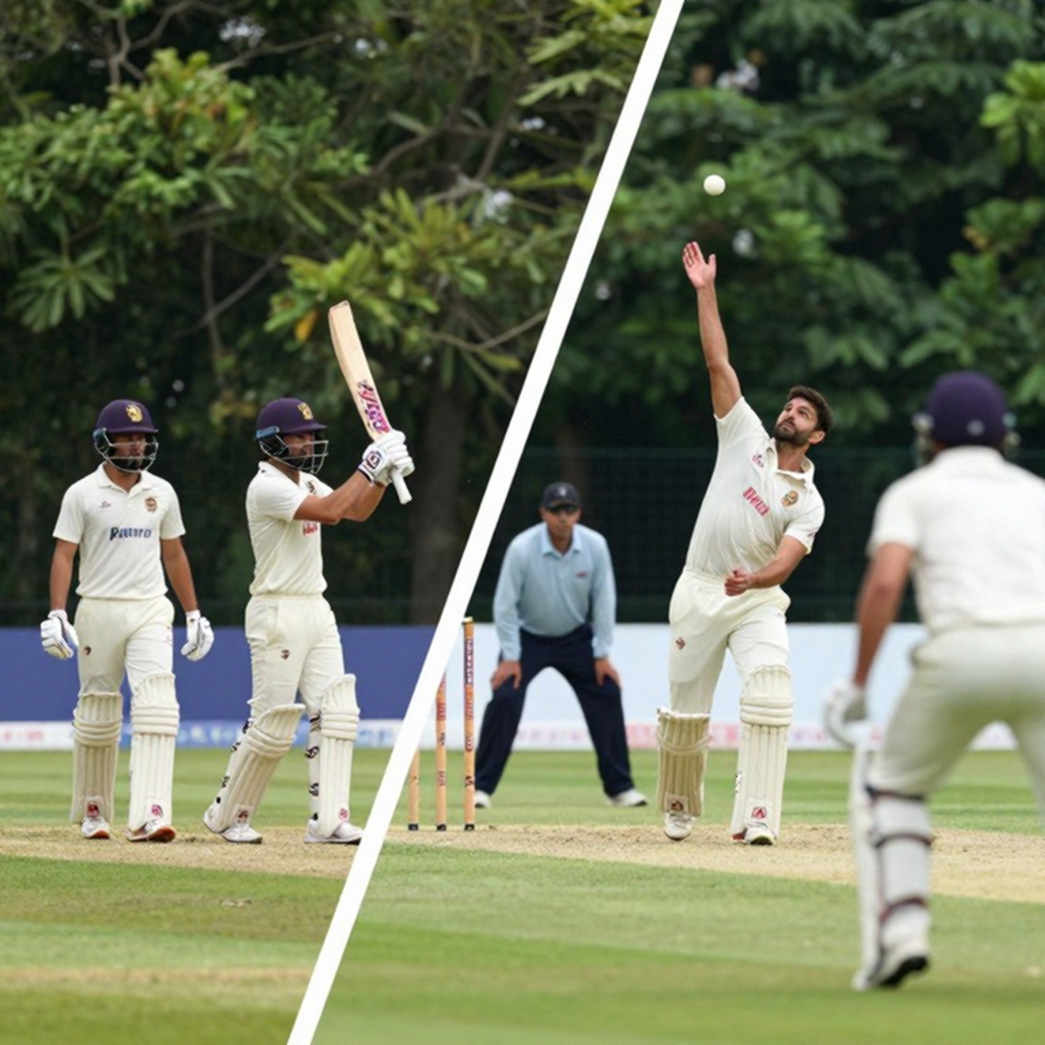
Test cricket defines success differently. Not scoring rate but the ability to survive matters here. Building a large first-innings total, extracting reverse swing once the ball is old, waiting for the surface to slow on the fourth innings, these are factors that have no place in a T20 model. The pressure of the first eighty overs with the new ball, the follow-on decision and declaration strategy are Test-specific concerns. The World Test Championship has turned these matches into a points-based competition, which has made home and away performance matter even more.
One-day cricket makes its own demands. The first ten overs of powerplay, when only a limited number of fielders may stand outside the ring; the thirty middle overs, when spinners hold the game together; and the last ten overs, when the scoring rate leaps, this three-phase structure is the signature of the format. The two-new-ball rule helps fast bowlers early but also opens opportunities for spinners through the middle.
T20 is the mirror image. Here strike rate matters more than average. A good innings is not fifty balls for sixty runs but twenty-five balls for forty-five that changes the momentum. In bowling, economy rate becomes the decisive statistic; anything below seven is regarded as high class. That is precisely why a bowler like Jasprit Bumrah is valued so highly in T20, because his yorker stops runs at the death.
The Hundred has added another layer to this variety. The hundred-ball format seeks a balance between speed and brevity, and its bowling units run to five balls, which makes finding rhythm a different kind of challenge for the bowler. An analyst who assumes the T20 model transfers unchanged will lose the nuances of this format.
Player evaluation is, for this reason, the most delicate task. A Test average, an ODI average and a T20 strike rate are three different scales, and conflating them is the greatest methodological error. A batsman's biggest career innings may come in Tests, yet his most valuable contribution to his team may come in T20. Equally, a bowler's Test average says nothing about his T20 utility. Ravichandran Ashwin is known in Tests for his reading of conditions, while Rashid Khan is known in T20 leagues for his pace and deception. Both are spinners, but they are assessed in two different frameworks.
The context of the numbers matters just as much. Conclusions drawn from small samples are the most misleading, whether it is treating three good matches as career-level ability or writing a player off after one poor series. Alongside that, the age curve must be watched, the stage where performance climbs or begins to decline, as must injury history, because a player returning from injury often produces a first stretch unlike his career average. Until these elements are joined together, any number remains meaningless on its own.
The gap between home and away performance is one of cricket's defining features. A team's true strength is revealed when it leaves spin-friendly surfaces and plays on quick, bouncy pitches, or the reverse. A series result should therefore be read not only through wins and losses but in connection with the surface and conditions in which it came. Weather, dew and cloud cover can also change outcomes, and in rain-affected matches the DLS method resets the target, so treating a win as direct proof of ability would be a mistake.
The gap between league and international cricket also deserves attention. A high price at auction does not show that a player will be equally effective in Test cricket. An auction price can reflect a team's need at that moment, excitement about a young domestic star, or panic bidding for a scarce slot. Rules such as the Right to Match make auction dynamics more complex still. Players need a No Objection Certificate from their board to appear in an overseas league, and this is exactly where the interests of league and national team collide.
Rules and governance matter as well. Provisions such as umpire's call in DRS determine when technology can and cannot overturn an on-field decision. Whether the debate is revenue distribution among the Big Three or monitoring by the ICC's anti-corruption unit, discussion is meaningful only when a concrete event exists. Bilateral series halted for political reasons also directly shape the landscape of the game.
The plain implication is that any cricket report is incomplete until three things are clear: format, venue and time. Analysis written without them may read impressively but tells us nothing about the game. Good cricket journalism is identifiable by keeping data and context together, and by accepting that saying nothing, where there is no information, is also an option.
संबंधित खिलाड़ी