
Rizwan and Imam Return for Quaid-e-Azam Trophy: PCB's 'Permission' Is Not a Clean Chit, Two Probes Remain Open
**संक्षिप्त उत्तर:** पाकिस्तान क्रिकेट बोर्ड ने मोहम्मद रिजवान और इमाम-उल-हक को घरेलू प्रथम श्रेणी क्रिकेट खेलने की अनुमति दे दी है। दोनों प्रेसिडेंट्स ट्रॉफी के अंतिम दौर से खेल सकते हैं और 3 नवंबर से शुरू हो रही क्वैद-ए-आजम ट्रॉफी में पेशावर (रिजवान) और मुल्तान (इमाम) के लिए उपलब्ध रहेंगे। **यह क्लीनचिट नहीं है:** यह केवल एक प्रशासनिक अनुमति है। NCCIA की ऑनलाइन सट्टेबाजी/जुआ से जुड़े आरोपों की जांच और इंग्लैंड दौरे के ड्रेसिंग रूम लीक की अलग जांच — दोनों अभी खुली हैं। किसी भी खिलाड़ी पर आरोप तय नहीं हुए हैं और न ही कोई दोष सिद्ध हुआ है। **PCB की प्रक्रिया पर सवाल:** बोर्ड ने छह दौर तक बिना किसी प्रकाशित निलंबन नियम, आरोप-पत्र या अपील मार्ग के अनुमति रोकी रखी — यानी एक डी-फैक्टो 'सॉफ्ट सस्पेंशन'। यही इस मामले का सबसे बड़ा शासन-दोष है। **खेल-संबंधी आकलन:** 3 नवंबर से पहले दोनों के पास लगभग एक ही प्रतिस्पर्धी लाल गेंद मैच है, इसलिए 'फॉर्म में वापसी' का दावा कमजोर सैंपल पर टिका होगा। इमाम पीक उम्र में हैं लेकिन उनका घरेलू स्कोर विदेशी दौरों के लिए कम भविष्यवाणी-मूल्य रखता है; रिजवान तीस के दशक के मध्य में हैं और घूमती पिच पर उनका असली दबाव बल्लेबाजी नहीं, कीपिंग वर्कलोड है। दोनों पिछले टूर्नामेंट में कप्तान थे, जिससे वर्कलोड और बढ़ेगा। **स्रोत की सीमा:** मुख्य दावे बेनाम सूत्रों पर आधारित हैं; न बोर्ड का बयान, न खिलाड़ी का बयान। किसी भी निष्कर्ष से पहले स्वतंत्र पुष्टि जरूरी है। **आगे देखने वाली चीज़ें:** कोई औपचारिक आरोप/नोटिस, NCCIA का नतीजा, ड्रेसिंग रूम लीक जांच के निष्कर्ष, क्वैद-ए-आजम ट्रॉफी का प्रदर्शन, अगला पाकिस्तान टेस्ट स्क्वाड, और केंद्रीय अनुबंध/पीएसएल रिटेंशन का रुख।
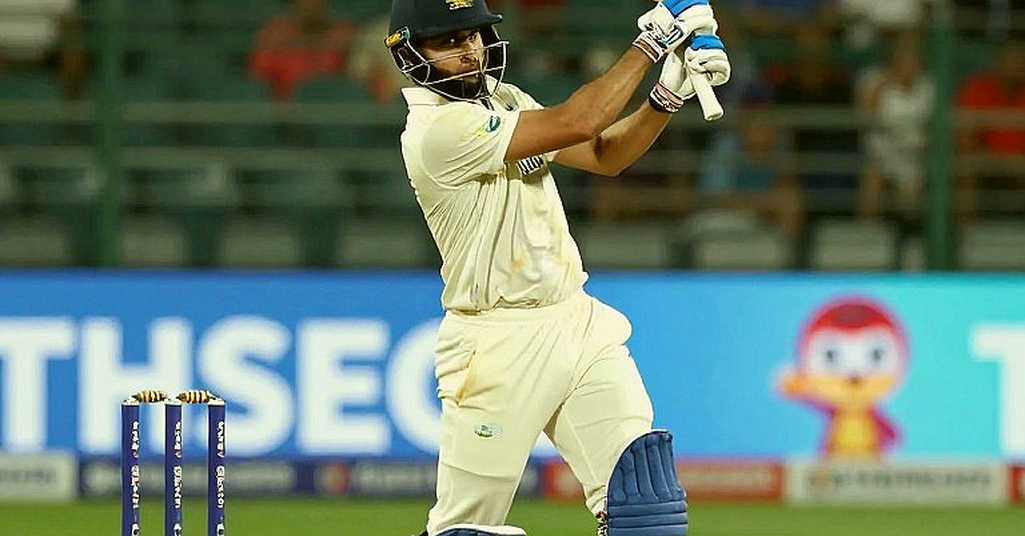
The Pakistan Cricket Board (PCB) has permitted Mohammad Rizwan and Imam-ul-Haq to play domestic first-class cricket. Geo News reported, citing sources, that both players made themselves available and the board granted clearance ahead of the seventh and final round of the President's Trophy Grade-I. Both will now be available for their respective regional sides in the Quaid-e-Azam Trophy starting November 3 — Rizwan for Peshawar and Imam for Multan. Rizwan's side faces KRL (Khan Research Laboratories); Imam's faces Ghani Glass.
If that were the whole story, it would be a routine availability item. It is not. The story matters because both players had been outside domestic cricket for roughly two months — the PCB withheld permission for the opening six rounds — and that restriction was imposed not under any cricket rule but in the shadow of an active law-enforcement investigation. The real story is not the 'return'. It is the basis on which the board withheld permission and the basis on which it released them — and no public explanation exists for either.
At a glance: what the facts are
- Both players made themselves available for first-class cricket.
- The PCB had withheld permission for the first six rounds.
- Permission was granted ahead of the seventh and final round.
- The Quaid-e-Azam Trophy first round begins November 3.
- Rizwan is attached to Peshawar, Imam to Multan; opponents are KRL and Ghani Glass respectively.
- In the previous tournament (President's Trophy), Rizwan captained SNGPL and Imam captained OGDCL.
- One investigation is being run by the National Cyber Crime Investigation Agency (NCCIA), relating to online betting/gambling allegations.
- A second, separate inquiry concerns a dressing-room information leak from the England tour.
- Concerns had also been raised about fitness assessments and a report-submission deadline.
'Permission' and 'exoneration' are not the same thing
The single biggest interpretive error available here is reading 'cleared' as 'exonerated'. They are entirely different. Permission is an administrative concession — the board has said you may play. Exoneration would mean the investigation is complete and no culpability was found. That is not what happened: the investigation was still running at the moment clearance was granted.
Nothing in the report states that charges have been framed against either player, nor that they have been found innocent. The door is open in both directions. The correct way to read this story is therefore: the status quo is unresolved; it will now simply be lived out on the field rather than on paper.
There is a subtler point. The report uses the word 'return' — 'return to domestic cricket'. That word itself indicates the board was treating both players as being outside normal domestic availability. But without any public charge sheet, suspension order, or code-of-conduct notice. In other words, a de facto holding pattern: nothing on paper, a restriction in practice. That is the weakest link in this entire affair.
Two investigations, two different worlds — conflating them is a mistake
First, clarity: two entirely separate investigations are running, and public perception has merged them.
The first is the NCCIA probe — into allegations relating to online betting and gambling. This is a state cyber-crime agency, which moves the matter out of the ICC Anti-Corruption Code's ambit and into Pakistani criminal/regulatory law. Gambling and betting are illegal in Pakistan. This investigation is therefore likely about whether an individual was personally involved in illegal betting — not about match-fixing or spot-fixing. The sanction ranges are entirely different.
The second is a separate inquiry into a dressing-room information leak during the England tour. That is a pure cricket-integrity matter — non-public team information (selection, tactics, pitch reads, player fitness) reaching outside parties. It sits squarely inside the ICC anti-corruption framework, because such information can be monetised in betting markets.
Critically, the report does not state that Rizwan or Imam are subjects of the leak inquiry. Yet media coverage is bundling the two investigations together, which artificially inflates the apparent severity of the allegations against these two named players. That is narrative construction, not fact.
The third, separate matter is the concern over the fitness report deadline. That is a contractual-compliance issue, not an integrity issue. Treating it as corroboration of the integrity allegations is simply wrong.
The PCB's process: a 'soft suspension' with no written rule
The real issue here is procedural, not moral. The board did not apply any published suspension rule; it used its discretion not to grant permission. Permission was withheld for six rounds, then granted. Throughout, there was no charge sheet, no timeline, no published standard, no appeal route.
That is the biggest governance defect in this affair. When granting or withholding permission becomes purely discretionary, the outcome can be unjust in either direction. A player can sit out for months without any formal charge; and if charges are later framed, the board will be accused of having allowed players to compete mid-investigation. Either way, the board ends up on the defensive.
It is also plausible that two different positions exist inside the board — the cricket-operations wing wanting capped players playing, and the compliance/anti-corruption wing wanting distance pending investigation. That is an inference, not a confirmation. But the way the decision changed — first withheld, then granted, with no public explanation in between — points to exactly that kind of internal tension.
One more detail buried in the report: clearance was granted only for the final round, not for the whole tournament. That selective availability suggests the permission was timed to satisfy a compliance condition — plausibly the fitness-report requirement — rather than reflecting a resolution of the integrity matter.
Imam-ul-Haq: at his peak, but this tournament is not his real test
Imam-ul-Haq is a left-handed opener inside the peak batting window (roughly 27–33). Every first-class innings he plays now is a maximisation opportunity — a chance to cash in on the time he has.
But there is a fundamental catch. His Test record has been built largely on slow, low surfaces in Pakistan and the UAE. His known technical vulnerability is against the short ball and against lateral movement with the new ball — particularly in England and Australian conditions. Multan's pitch has a reputation for taking turn from day three. So for Imam the toughest examination there will be the new ball, not spin — and even that examination will come in familiar home conditions, not foreign ones.
The direct implication: a heavy run of scores for Imam in the Quaid-e-Azam Trophy will tell selectors nothing about the one thing that has limited his away record. The runs will look reassuring and be analytically close to worthless. Any selection conclusion must carry an explicit condition discount.
Second, Pakistan's Test top order has been persistently fragile. Imam's availability therefore matters more than his average suggests, because the alternatives are thin. That is not a testament to his importance; it is a testament to the team's weakness.
Mohammad Rizwan: the age curve and workload arithmetic
Rizwan was born in mid-2026, placing him in his early-to-mid thirties in this window. For a wicketkeeper-batter, the 32–35 band is when both keeping volume and long-format concentration typically begin to show strain. That is not a prediction; it is an observation of the normal age curve.
In Rizwan's case, two things must be separated. First, his Test record — respectable, not dominant. Second, his T20I profile — where his strike rate has sat below modern benchmarks, and where that has been the most-criticised element of his game, because his anchoring method conflicts with modern T20 tempo demands.
Conflating the two is the biggest analytical error available. A strong Quaid-e-Azam Trophy would change nothing about his T20I verdict, and T20I form is no guarantee of what he will do in Tests. Those who assess Rizwan's Test utility through a 'superstar' lens systematically overstate his Test value.
His real strength is spin manipulation (sweep, reverse-sweep) and leg-side scoring. On a turning surface like Multan, his physical stress point will not be batting but keeping workload — 90 overs of squatting, rising, moving, followed by batting. That is the risk the report does not mention in a single word.
Both were captains — a detail the report buries
An important fact that appears only in passing: in the previous tournament, Rizwan captained SNGPL and Imam captained OGDCL. So the two people from whom the board was withholding permission were not fringe squad members but the leaders of two departmental sides.
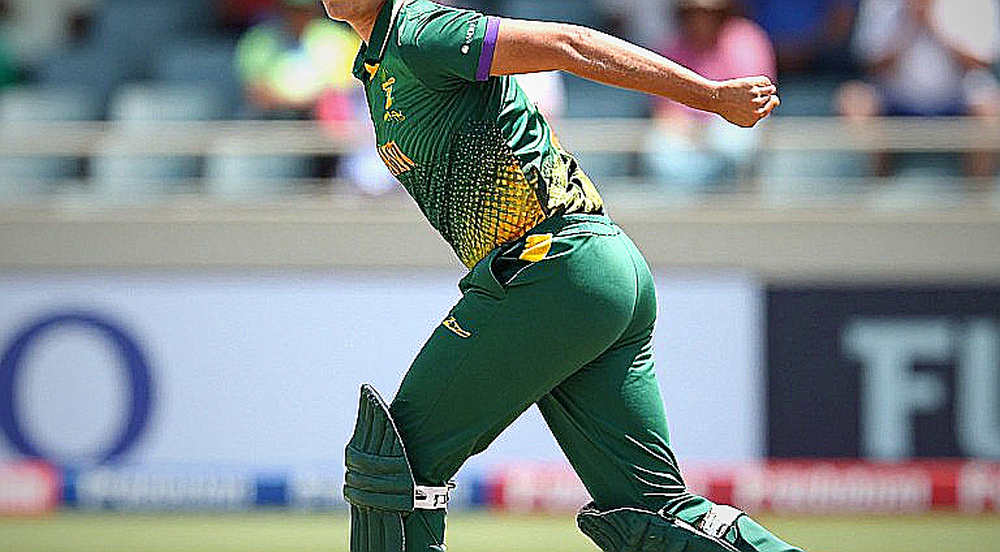
That has two consequences. First, the disruption to SNGPL's and OGDCL's preparation was far larger than one squad member sitting out. Second, the political weight of the clearance was correspondingly large.
But it also creates a new risk: captaining immediately upon return means a heavy workload — full batting responsibility, field settings, and in Rizwan's case full keeping duties. Following a single match of preparation with that load is a poor sequence for injury avoidance.
Match sharpness: not the story the headline implies
One factual point must be stated plainly. Both players were cleared only for the final round of the President's Trophy. That means roughly one competitive red-ball match before the Quaid-e-Azam Trophy begins on November 3.
For an opening batter and a wicketkeeper-batter — two of the most rhythm-dependent roles in the game — one match is not a preparation block; it is a sharpness top-up. Calling it a 'return to form' would be a small-sample claim of the weakest kind.
Beyond that, the President's Trophy had been running since September 12 and was reaching its final round. That means both players spent roughly two months without competitive cricket — long enough to erode both fitness benchmarks and selection visibility. And that is followed immediately by two back-to-back tournaments with minimal off-season loading.
The domestic structure: two parallel tournaments and their cost
Pakistan runs two first-class tournaments in a single season — the regional Quaid-e-Azam Trophy and the departmental President's Trophy Grade-I. The arrangement is old and has its own politics.
There are two consequences. First, the calendar compresses and the red-ball load on players rises. Second, selectors get more matches but less clean data, because the two tournaments differ in standard and context.
The departmental sides — SNGPL (Sui Northern Gas Pipelines Limited), OGDCL (Oil and Gas Development Company Limited), KRL (Khan Research Laboratories), Ghani Glass — are state-linked enterprises. That is both the distinctive feature of Pakistan's domestic model and its structural weakness. When the board changes domestic formats, these institutions' participation wobbles and availability rules become unstable.
That is why six rounds of unavailability should not be treated as a club-level inconvenience. It was a loss to national-team preparation.
Selection impact: runs versus investigation
Pakistan's Test identity is built on home surfaces that reward spin and reverse swing. Their record in Australia, England and South Africa has long been weak. That asymmetry is among the widest among full members, which is why home first-class form carries very limited predictive value for away tours.
This produces an uncomfortable truth: for the tours that matter most, domestic runs are the weakest selection currency.
And one bigger point — the biggest variable in selection is now not cricket but the state of the investigations. If a squad is announced for the next Test assignment and one player is left out, the immediate question will be whether that was for performance reasons or compliance reasons. The board has no public framework for answering that. This is 'selection distortion' — where selectors may avoid players for reasons unrelated to cricket.
The commercial side: where the real damage may sit
There is almost no economic content in this report, but its commercial consequence could be the largest downstream effect.
Rizwan's brand value, endorsements and PSL stature are largely independent of whether he plays the Quaid-e-Azam Trophy. But his sporting value to the Test side is modest and directly dependent on it. The two must not be conflated in selection debate.
Betting-related allegations are a commercial risk vector in themselves. Even unproven, such allegations affect sponsor risk appetite — particularly for state-owned enterprises. SNGPL and OGDCL are public brands; a betting allegation against their employee affects their public brand, not just cricket.
One more thing that does not show on the surface: an unresolved integrity file can trigger caution at the next central-contract cycle and in PSL retention discussions. Markets tend to price 'investigation-adjacent' players conservatively, even absent any finding.
And there is an inverted conflict here. Normally a player chooses a league and forsakes his country. Here it is the reverse — the player is playing the lowest-paying, highest-obligation tier, domestic first-class cricket, because that is the only route back to national selection and contract security. Domestic red-ball cricket has become a currency of compliance and rehabilitation, not commerce.
Risk matrix: what is at stake
Sporting risk: roughly one competitive first-class match before November 3. Level: medium; likelihood: high. Mitigation: extra nets and second-XI volume; manage expectations on early-season output.
Workload risk: keeping load plus a compressed two-tournament calendar for a wicketkeeper-batter in his thirties. Level: medium. Mitigation: load management; possible rotation out of one competition.
Reputational risk: selection hesitancy even absent charges. Level: medium; impact: high. Mitigation: explicit, published selection criteria.
Commercial risk: brand exposure for state-linked employers. Level: medium. Mitigation: keep employer and cricket-administration communications separated.
Rules/integrity risk: investigation escalating to formal charges under the ICC Code or Pakistani law. Level: high; impact: very high.
Rules/integrity risk: the board's discretionary 'no permission' mechanism challenged as an unlawful de facto suspension. Level: medium.
Public-opinion risk: polarised reaction — 'persecuted stars' versus 'the board finally acted'. Level: high.
Systemic risk: parallel first-class tournaments compress the calendar and produce low-context data. Level: medium.
Overall risk rating: High. The rating is not driven by the sporting content but by the coexistence of an active law-enforcement investigation, a second integrity inquiry, and an unwritten discretionary clearance mechanism — all attached to two senior international players. Any one alone would be medium; combined, with an opaque board process, the tail risk (formal charges plus de facto suspension plus contract loss) remains material even at low probability.
Three scenarios
Worst case: the NCCIA investigation produces formal charges; the PCB opens a parallel code-of-conduct/anti-corruption case; players face provisional suspension and lose central contracts; the dressing-room leak inquiry reaches a squad insider and triggers a wider cultural review of the Pakistan dressing room. Outcome: careers interrupted for a season or longer. Low probability, because the evidence is not in the public domain.
Base case: no charges are brought; both return through domestic cricket to international consideration; the board's discretionary approach is criticised for opacity but no rule formally changes. Outcome: careers resume with a reputational shadow. Medium probability.
Best case: the investigations close without adverse findings; the board formalises a written 'availability pending investigation' protocol, converting an ad-hoc practice into transparent governance; both players re-enter Test reckoning on form. Medium probability.
Public narrative: a story running ahead of its evidence
The current narrative is 'two Pakistan stars return to domestic cricket after being cleared'. That is a reinstatement/redemption frame sitting on top of an unresolved integrity story.
The narrative's fundamental weakness is that the claim embedded in it — that clearance equals exoneration — is not supported by any information point. The sample-size check also fails: a 'return to form' or 'return to favour' story is being built on one competitive first-class match.
The expectation gap is clear. On player performance, the expectation is that international-class players will dominate a domestic tournament — when the actual base is one match of preparation, home-condition data, and keeping workload. That expectation is optimistic. On team results, the report's own framing says both sides will be 'strengthened' — true on paper, but with zero form data it is an opinion, not a finding. And on selection, the expectation is a swift return to the Test frame — when selection now rests on integrity files, not runs. That is the widest gap of all.
No quantitative sentiment data is available. Qualitatively, Pakistani cricket audiences are among the most emotionally reactive markets in the sport, and integrity stories involving senior players reliably produce two polarised camps. Expect a high amplification coefficient and low factual density.
The sourcing weakness: one outlet, anonymous sources
The report's biggest professional weakness is that its core claims rest on unnamed 'sources', and a large share of the information points carry no source attribution at all. No board statement, no player statement, no named official. This is single-outlet, anonymous-sourced reporting on a legally sensitive matter.
That does not mean the story is wrong. It means no factual narrative should be built on it without corroboration — from PCB statements or a second outlet.
One more point: the information reaching a major outlet immediately before a tournament starting November 3 is consistent with an availability-announcement motive — informing selectors and the public that these players will feature — rather than an investigative-journalism motive.
What to watch next
- Any formal charge or notice — board statements, players' legal representatives, credible Pakistani outlets. A published charge sheet or code-of-conduct notice would convert a soft restriction into a hard suspension.
- The NCCIA outcome — closure without action versus referral for prosecution. A binary outcome and the single largest swing factor.
- Findings of the dressing-room leak inquiry — if a squad insider is named, the story widens far beyond these two players.
- Quaid-e-Azam Trophy performance data — scorecards from round one onward. Two or more substantive innings, or an early failure sequence — selection pressure either way, but with a home-conditions discount.
- Pakistan squad for the next Test assignment — inclusion or omission, and the stated rationale. This will reveal whether the investigation or the cricket is driving selection.
- Central contract / PSL retention treatment — downgrade, exclusion or 'pending' status. A market-based read on how the ecosystem is pricing the integrity risk.
- Fitness-report compliance — whether the deadline lapse recurs. That would indicate a contractual-discipline issue independent of the betting file.
Glossary: terms readers need
First-class cricket: the highest tier of multi-day domestic cricket (typically three to five days). It is the recognised qualification for Test selection, and its statistics are kept separately from List A (50-over) and T20 records.
Quaid-e-Azam Trophy: Pakistan's premier domestic first-class competition, contested by regional sides. Historically the primary selection shop window for the Test team.
President's Trophy Grade-I: Pakistan's separate departmental first-class competition, contested by institutional/state-owned employer sides rather than regional ones.
Departmental team: a side run by an institution or state-owned enterprise that employs players. A distinctive feature of Pakistan's domestic model and a source of structural instability.
PCB: Pakistan Cricket Board, the national governing body.
NCCIA: National Cyber Crime Investigation Agency — a state law-enforcement body, meaning the matter sits in the criminal/regulatory domain rather than purely under cricket's own code.
ICC Anti-Corruption Unit (ACU): cricket's global integrity body, which investigates match manipulation, spot-fixing and misuse of inside information, including dressing-room leaks. Distinct from a national cyber-crime investigation into illegal gambling.
Spot-fixing: manipulating a specific, isolated event in a match (for example a no-ball at a named moment) rather than the result — the offence at the heart of the 2026 Pakistan case.
Central contract: a retainer agreement between a national board and a player, graded by format and seniority, carrying fitness benchmarks, availability obligations and disciplined-conduct requirements.
Dressing-room information leak: the passing of non-public team information (selection, tactics, pitch reads, player fitness) to outside parties — a serious integrity breach because it can be monetised in betting markets.
Powerplay: the fielding-restriction phase — the first six overs in T20. Cited here only to note that Rizwan's T20 powerplay tempo is a separate, non-transferable debate.
WTC: World Test Championship — the ICC's Test competition. Noted here only as the reason Test-format availability matters.
Home/away split: separating a player's statistics by venue conditions. In cricket this is not a refinement but a necessity, because the home-away performance gap is among the largest in any team sport.
Disclaimer
This analysis rests entirely on the reporting available, which derives from a single news report relying on anonymous sourcing. No information point states that either player has been charged with, or found culpable of, any offence; all references to investigations are allegations as reported and remain unproven. Several statistical figures are pending verification and should be confirmed against ESPNcricinfo, Cricbuzz or official ICC records before being used in any decision context. This document is for sports-information reference only and does not constitute betting advice of any kind. Sporting and legal outcomes are highly uncertain; treat these conclusions rationally.