
French Open 2026: Sindhu beats Akechi to set up An Se Young final — but the 'outclass' scoreline tells a different story
मुख्य तथ्य: फ्रेंच ओपन 2026 महिला एकल सेमीफाइनल में पी.वी. सिंधु ने हिना अकेची (जापान) को 21-10, 20-22, 21-16 से 73 मिनट में हराया। सिंधु तीसरे गेम में 15-16 से पिछड़ीं और लगातार छह अंक जीतकर मैच जीता। यह उनका 2026 सीज़न का दूसरा सुपर 750 फाइनल है; जुलाई में जापान ओपन खिताब जीता था। फाइनल रविवार को, सामने दुनिया की नंबर एक और मौजूदा विश्व चैंपियन अन से यंग (दक्षिण कोरिया)। आमने-सामने रिकॉर्ड: सिंधु 0-10 अन से यंग के खिलाफ; यह ग्यारहवाँ मुकाबला होगा, 2026 में दोनों के बीच पहले ही दो मुकाबले हो चुके हैं। असली मोड़: दूसरे गेम में सिंधु 17-16 से आगे थीं और 20-22 से हारीं — आख़िरी नौ अंकों में छह प्रतिद्वंद्वी को गए। सीज़न-स्तर का आकलन: दोनों फाइनल सुपर 750 स्तर के; 2026 में सुपर 1000 फाइनल नहीं, इसलिए शीर्ष-4 के विरुद्ध प्रमाण अधूरा। शैली-समीकरण: सिंधु की पावर-अटैक शैली को रिट्रीवल-कंट्रोल शैली संरचनात्मक रूप से काटती है; रैली लंबी होने पर फायदा अन से यंग को। अनुपलब्ध डेटा: स्मैश गति, प्रति रैली औसत शॉट, अनफोर्स्ड गलतियाँ, नेट-पॉइंट जीत दर, अन से यंग के सेमीफाइनल की अवधि, और 0-10 हार के स्कोर-स्वरूप — इनके बिना तकनीकी और शारीरिक निष्कर्ष अधूरे हैं। प्रश्न: क्या 'आउटक्लास' सही शब्द है? नहीं — 73 मिनट का तीन-गेम मुकाबला और 20-22 की हार इस विशेषण का खंडन करते हैं; यह बच निकलने वाली जीत थी।
PARIS — P.V. Sindhu beat Japan's Hina Akechi 21-10, 20-22, 21-16 in the French Open 2026 women's singles semifinal on Saturday night, booking her second Super 750 final of the season in 73 minutes. She trailed 15-16 in the decider before reeling off six straight points to close it out. On Sunday she will face World No. 1 and reigning world champion An Se Young.
This report begins with the scoreline, not with the adjective attached to the headline. 'Outclasses' means total domination. 21-10, 20-22, 21-16 and 73 minutes do not stand beside that word. A match in which the losing player led 16-15 in the decider, and won the middle game 22-20, is not a story of being crushed under pressure. It is a story of survival. In sports journalism, the difference between the two is the most important difference there is.
Game one: the only true 'outclassing'
21-10 requires no explanation. An eleven-point margin is rare in a Super 750 semifinal and shows Sindhu's opening plan worked completely. The advantage of a tall, long-lever player is a high smash contact point, short rallies, and the ability to force the opponent into decisions within the first three shots. That is exactly what happened. But winning a game is not winning a match — and that is the first crack.
Game two: 17-16 to 20-22 — the real turning point
Sindhu led 17-16 in the second game. The game was under her control. What followed was 20-22: she conceded six of the last nine points of a game she was running. Close-out ability is the most undervalued and most decisive skill in badminton. It is not just technique; it is discipline in shot selection. Against an opponent whose defining trait is the lowest error rate in the discipline, turning a 17-16 lead into a 20-22 defeat is not a three-point lapse — it is a repeatable failure mode.
Game three: six points that are the genuine positive signal
Falling 16-15 behind and then winning 21-16 is the most valuable part of the match. Six consecutive points from a deficit in a decider is a strong pressure-behaviour marker. But two cautions apply. First, that burst came in the final stretch of a 73-minute match at age 31, with physical and mental energy already spent — repetition is not guaranteed. Second, it came against an opponent who is not World No. 1. Against An Se Young, a 16-15 scoreline may never arrive, and if it does, those six points will not come easily.
The 'error-free' claim: a tired adjective
Coverage described Sindhu's play as 'error-free'. That claim does not match the data. In a match where you lose a game 20-22 and trail 15-16 in the decider, 'error-free' is technically wrong. A better word is 'uneven', or 'rhythm-dependent'. This is not a small semantic slip; it plants a false picture in the reader's mind — a player in complete control. The truth is that Sindhu seized control, lost it, and regained it. That three-phase cycle should be the basis of the final's plan.
The style war: power attack vs. retrieval and control
This final is a contest between two eras. Sindhu's archetype — tall, high contact point, heavy smash, short rally construction — was the top-of-discipline model from 2026 to 2026. Its winning condition is to end rallies early and impose rhythm. An Se Young's archetype is its mirror image: all-court control, defence-to-counter conversion, long rallies, and at her career peak, the lowest error rate in the game. When these two styles meet, the structural advantage sits with retrieval and control, because extending a rally is easier than shortening one against a player who returns everything.
And here is a fact the coverage turned into a footnote: Sindhu has never beaten An Se Young. The record is 0-10; Sunday is the eleventh meeting. They have already played twice in 2026, with the same outcome — so the most recent evidence is also negative.
The physical ledger: 73 minutes, age 31, roughly 24 hours
The semifinal ended on Saturday night; the final is on Sunday. Roughly 24 hours, a large share of which must go to recovery. 73 minutes of three-game badminton, with a rhythm-dependent decider, is a high-consumption match. Height is a double-edged weapon: reach and smash contact point on one side, a higher energy cost per long rally on the other. Against a retrieval-control player, long rallies are precisely the terrain where that cost is taxed. That said, the key numbers — average rally length here, and the duration of An Se Young's semifinal — are not available. The physical impact cannot be assessed quantitatively. It is an open question, not a conclusion.
Sindhu's 2026 season: a real revival, calibrated at Super 750
In season terms this is a measurable revival. Two finals in 2026, one of them a title (Japan Open, July). Two Super 750 finals in a season at 31 is a strong return. But a fine distinction matters: both finals are at Super 750 level, and there is no Super 1000 final this season. That suggests she is converting against the 8–20 ranked field but has not yet proved it against the top four. This is an inference from the coverage's own counting, not a stated fact — treat it as medium-confidence.
On points and seeding, the practical value is clear: a second Super 750 final materially strengthens her World Tour Finals (season top-eight) qualification position. Whether it lifts her into a protected top-eight ranking bracket cannot be assessed. The 2026 season sits outside the LA 2028 Olympic qualification window, so no quota pressure exists yet.
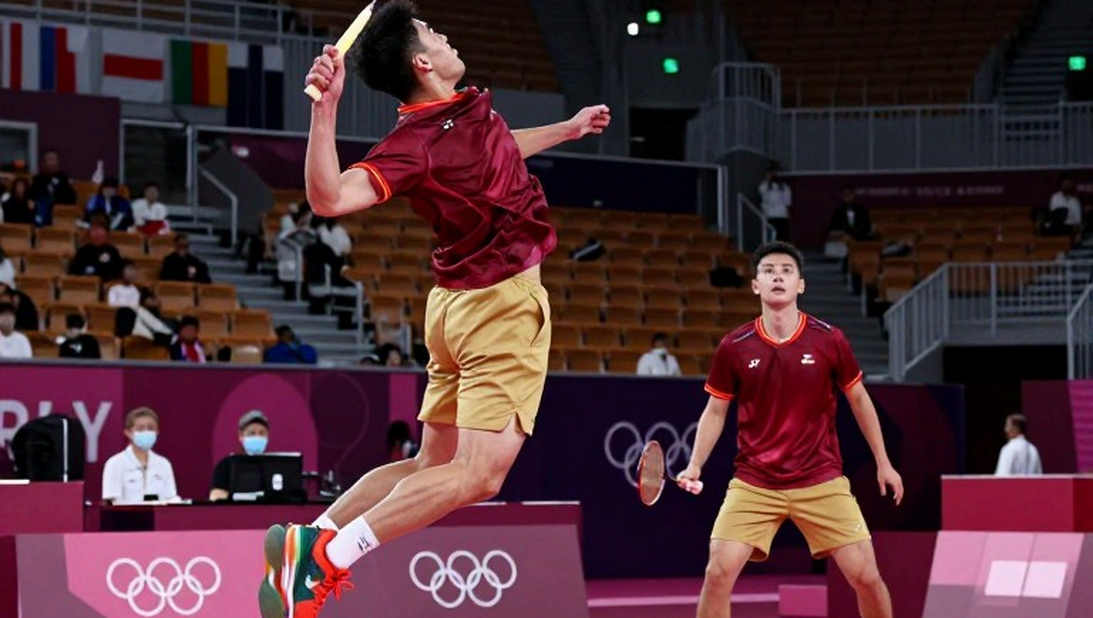
The opponent: An Se Young
Her profile is short but decisive. She is World No. 1. She is the reigning world champion — the highest quality marker available in the sport. She is in her career peak. How long her semifinal ran, how much fatigue remains, what her recent form looks like: none of this is available. That is the largest gap in the source material — and it reinforces the central conclusion: Sindhu's plan should be dictated by the opponent's game more than her own.
What we do not know — and why it matters
Four numbers were essential to analysing this match and all four are missing: smash speed, average shots per rally, unforced-error count, and net-point win rate. Without them, technical claims remain incomplete. The second major gap concerns the shape of the 0-10 record. Were those ten defeats one-sided or narrow? Did Sindhu take matches to three games? Without score data, the answer is unavailable — and it changes the strategic read entirely. Narrow defeats mean tactical room; one-sided defeats mean a structural style problem.
Risk flags
Technical claims lack data support. Sindhu's style is countered by a specific opponent's style. There is injury risk in a high-consumption style, given a 73-minute three-game load about 24 hours before the final. Single-match generalisations ('outclasses', 'error-free') are being over-extended. And there is no evidence either way about a technical remodel or transition period.
Three keys to the final
First, control of the first three shots — and, more importantly, the ability to close a lead, not merely build one. Second, rally length: short rallies favour Sindhu, long rallies favour her opponent and the physical ledger. Third, the mental key, which is the heaviest: playing an eleventh match after ten defeats is a question of memory, not technique. Her six-point burst in the decider is the real capital here — proof, if she trusts it, that she can change rhythm under pressure.
Conclusion
What Sindhu did is not small. A second Super 750 final at 31, a comeback from behind in a 73-minute three-game fight, and a six-point closing run say her match management is alive. But the same match exposed her limit: losing control of the middle game, sliding from 17-16 to 20-22, and doing so against an opponent who is not World No. 1. On Sunday she faces the player best equipped to punish exactly those three weaknesses.
Calling this an 'outclassing' is easy but wrong. The real story is that an experienced player won a live match — and now faces an opponent against whom not one loose rally will be affordable. The 0-10 record is heavy precisely because it is the testimony of ten different days, not one accident. Sunday is about turning it from a statement into a footnote — and that is far harder than anything that happened in 73 minutes on Saturday.