होमWorld CricketHeather Knight and Laura Harris deliver as Thunder beat Heat by six wickets with 20 balls to spare
World Cricket
Heather Knight and Laura Harris deliver as Thunder beat Heat by six wickets with 20 balls to spare
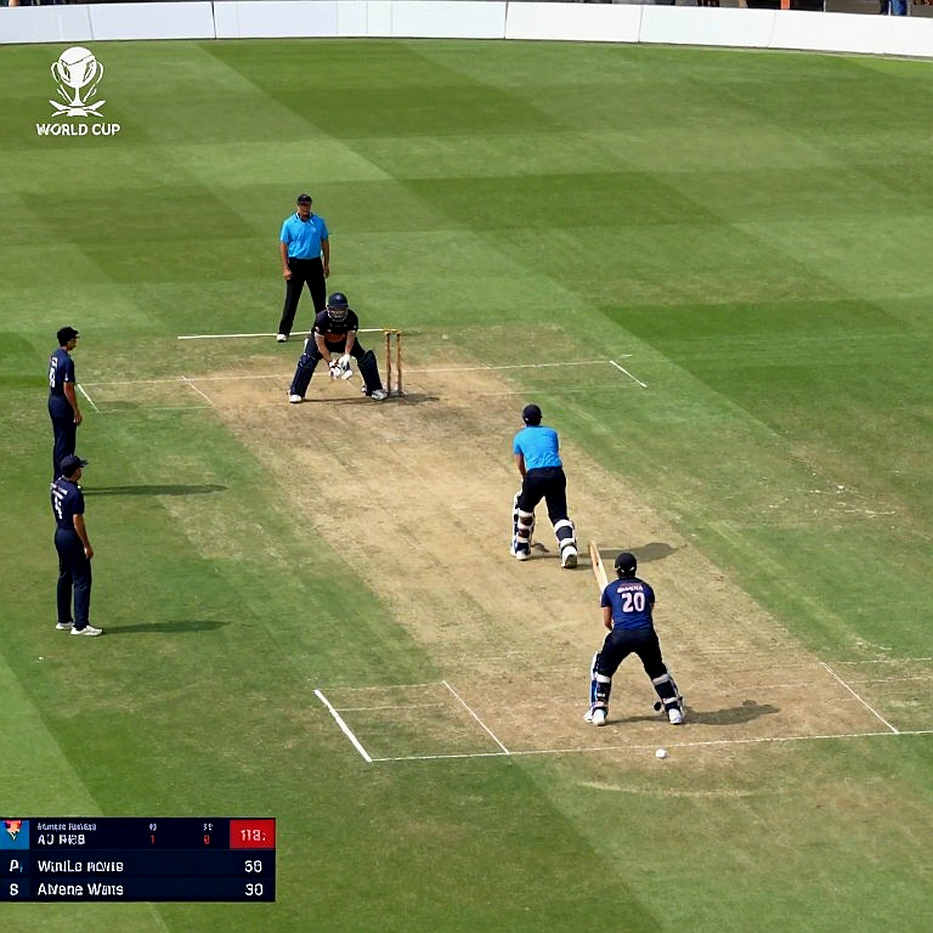
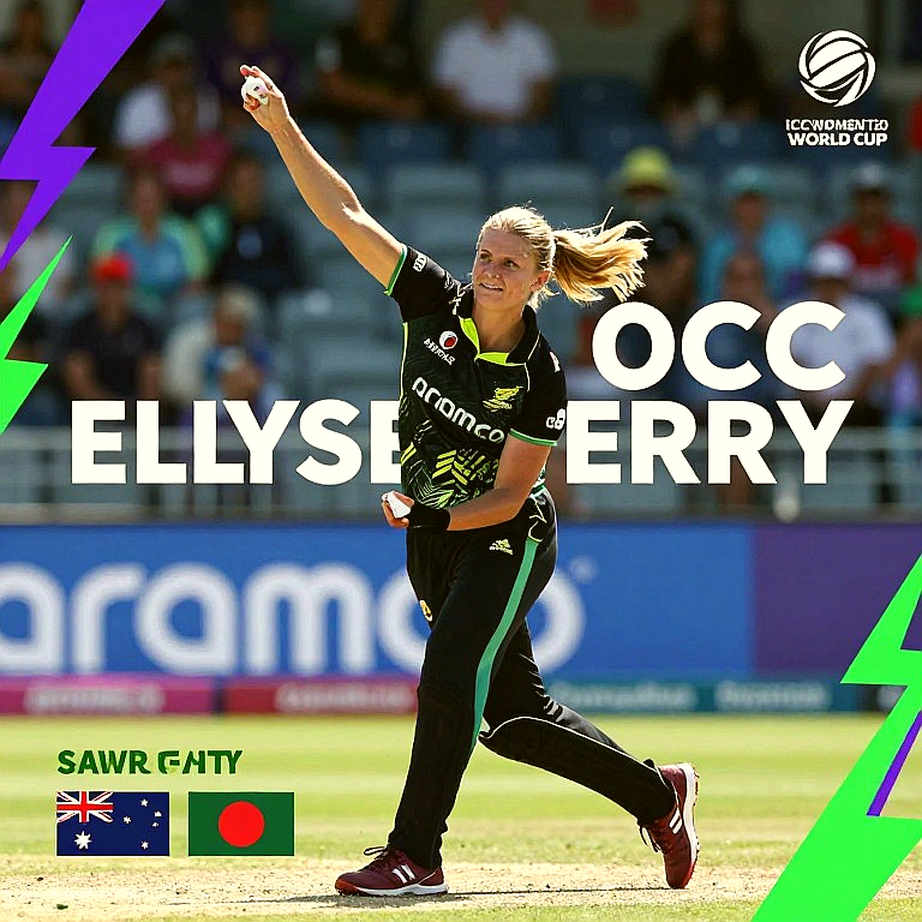
सिडनी थंडर ने WBBL मुकाबले में ब्रिस्बेन हीट को छह विकेट और 20 गेंद शेष रहते हराया। ड्रमॉयन ओवल पर हीट ने पहले बल्लेबाजी करते हुए पांच विकेट पर 178 रन बनाए, जिसमें ग्रेस हैरिस (58) और जॉर्जिया रेडमेन (57) के अर्धशतक शामिल रहे। जवाब में थंडर ने 16.4 ओवर में चार विकेट पर 180 रन बनाए। फोएबी लिचफील्ड ने 19 गेंदों पर 41 रन की तेज शुरुआत दी, हीदर नाइट 54 रन पर नाबाद रहीं और लॉरा हैरिस ने 16 गेंदों पर 35 रन बनाकर मैच खत्म किया। थंडर की यह लगातार दूसरी जीत है। गेंदबाजी में जॉर्जिया वोल ने 25 रन देकर दो और बैसिंगथवेट ने 34 रन देकर दो विकेट लिए। थंडर ने करीब 10.8 प्रति ओवर की गति से पीछा पूरा किया, जबकि जरूरी रन रेट करीब 8.95 था।
Sydney: Sydney Thunder beat Brisbane Heat by six wickets with 20 balls to spare in their Women's Big Bash League (WBBL) fixture at Drummoyne Oval. Heat, who won the toss and chose to bat, posted 178 for 5. Thunder chased down the 179-run target in 16.4 overs for the loss of four wickets, leaving a full 20 deliveries unused. It is Thunder's second win in two matches this season.
The scorecard looks one-sided on the surface, but understanding this match requires reading it in three distinct phases: the Powerplay, the middle overs and the death. Thunder edged Heat in all three, and that is the real reason behind the result.
Start with Heat's innings. The captain won the toss and batted, a logical decision on a good surface. But Heat's start was slow. They did not lose wickets in the Powerplay, yet the scoring rate was not the kind that builds a platform for 180-plus. Grace Harris completed a 32-ball fifty to give the innings momentum, and Georgia Redmayne, after an initial settling period, accelerated herself. Both made fifties — Redmayne 57, Harris 58 — but 178 for 5 tells you there was no third major contribution. Orla Prendergast did strike a brisk 28, but beyond her the middle order simply could not stay at the crease.
The decisive passage was the last two or three overs of Heat's innings. Thunder's death bowling was so tight that Heat could not build on the momentum generated around the eighth and ninth overs. A total of 178 for 5 on this pitch is being read as below par, and that assessment looks right — after two fifties, the side still stalled around 180 when 190 to 195 should have been achievable. That gap proved to be the difference in the match.
Now the chase. Phoebe Litchfield set the tone from the first over as if the target were a small one. She made 41 off 19 balls, including six fours and a six — meaning roughly 73 per cent of her runs came from boundaries. It is a high-variance but high-ceiling T20 batting profile, and it is at its most effective when chasing a modest total. Interestingly, Litchfield was dismissed off the last ball of the Powerplay. It was a small but meaningful inflection point: with only two fielders permitted outside the circle in the Powerplay, the risk she took until the sixth over was advantageous within that rules framework.
After Litchfield fell, Thunder needed a batter to hold the required rate, and that role fell to Heather Knight. She reached fifty off 27 balls — a strike rate of roughly 185 to the milestone, well above the 130 to 150 benchmark for a T20 middle-order anchor. But her contribution was larger than the numbers suggest: she shared a 63-run stand with Anika Learoyd, who made 37. That partnership moved the game from possible to controlled. Knight finished unbeaten on 54. It is worth noting that her strike rate probably dropped after the fifty, because the role changes at that point — from accelerating to shepherding the chase. The total figures do not show this, but the shape of the innings suggests her real value here was calm and average, not raw strike rate.
Then came Laura Harris's closing blow. Thirty-five off 16 balls, a strike rate of roughly 219. Her flurry of fours and sixes shut the door on Heat completely. Harris is clearly being used as a specialist death-overs hitter, and her value is highest when chasing.
Look at the arithmetic and the picture becomes clear. The target was 179, a required rate of about 8.95 per over. Thunder made 180 in 16.4 overs, at roughly 10.8 per over. That does not mean they suddenly accelerated at the end; it means they were ahead of the asking rate for almost the entire innings. That is the true definition of a comfortable win, and there is no toss or Duckworth-Lewis caveat attached to it.
In Thunder's bowling effort, Georgia Voll took 2 for 25, and her most important contribution was breaking the developing stand between Grace Harris and Bhatia. Bassingthwaighte took 2 for 34. Voll's batting did not come off, but her value with the ball was match-defining — an aspect media coverage tends to underrate.
In terms of team structure, Thunder's batting looked close to ideal for this chase: an aggressor in Litchfield at the top, a tempo-controller in Knight in the middle and a finisher in Harris at the end. It is a three-gear top order, and its greatest strength is that the structure does not collapse if one individual fails.
Heat's problem is the mirror image. Grace Harris and Redmayne were both in form, both made fifties, and the team still lost. That points to depth, not form. When your top three fire fully and the total is still below par, the issue is a lack of a reliable power-hitter at five or six. It may be a tactical issue — a slow-start-then-accelerate template that is not working on good pitches — and it may be a personnel issue. The next few fixtures will reveal which.
One further layer is visible in this fixture: the role of overseas players. Thunder fielded Heather Knight (England) and Nadine de Klerk (South Africa); Heat fielded Orla Prendergast (Ireland) and Bhatia (India) — four different international players in one match. That is direct evidence of the WBBL's global pull. But it carries a structural risk: all of them play on board-issued No Objection Certificates while also being national-team assets. Any international window collision hits the franchise directly. That concern is particularly acute for Thunder, whose chase structure is built around Knight and de Klerk.
At the governance and rules level, there is no controversy in this match. The Powerplay rule shaped the narrative — Litchfield's dismissal came on the final ball of the Powerplay, a rule-bound inflection point rather than an accident. Both innings' brief scores are provided, there is no umpiring controversy or DRS reference, and the match report is transparent. There is no anti-corruption or betting-related signal either.
On the narrative side, the comfortable-win framing is not inflated here. Chasing 179 with 20 balls to spare is objectively dominant. But while the media focus is on Knight and Harris, two stories are being missed. First, Litchfield's Powerplay platform, which made the chase easier; had she not made 41, the pursuit of 179 would have looked very different. Second, Voll's bowling, which broke Heat's most dangerous partnership.
The most important caveat is that this is single-match data. Two wins from two is a good early marker, but it is not proof of title credentials. Similarly, this innings is not evidence of Knight's season-long form, nor is one defeat a forecast for Heat's campaign. What should be recorded permanently is this: Thunder have a balanced, role-based batting structure, while Heat have a hole to fill despite two fifties. Two things to watch in the next round — Heat's selection rebalance and Thunder's use of their overseas quota.