
Asia's Cricket Calendar Crisis: The Three-Way Tug of War Between Money, Workload and Governance
एशियाई क्रिकेट का कैलेंडर संकट तीन कारणों से पैदा होता है: (1) आईसीसी का फ्यूचर टूर्स प्रोग्राम और द्विपक्षीय सीरीज़ों का लगातार बढ़ता दबाव, (2) आईपीएल, पीएसएल, एलपीएल और बीपीएल जैसी निजी टी-20 लीगों के अलग विंडो, और (3) आईसीसी राजस्व में भारतीय बोर्ड की सबसे बड़ी हिस्सेदारी (लगभग 38-39%) से उपजी वित्तीय असमानता। इसका सीधा असर खिलाड़ियों के वर्कलोड, चोटों की बढ़ती दर और छोटे बोर्डों की वित्तीय निर्भरता पर पड़ता है। समाधान के तीन व्यावहारिक रास्ते हैं: केंद्रीय अनुबंध से बाहर के खिलाड़ियों तक वर्कलोड नियमों का विस्तार, आईसीसी राजस्व वितरण में संतुलन, और कैलेंडर बैठकों में खिलाड़ी प्रतिनिधियों की औपचारिक भागीदारी। 2028 लॉस एंजिल्स ओलंपिक में क्रिकेट की टी-20 वापसी एक नया अवसर और एक नई कैलेंडर चुनौती दोनों है।
Asian cricket is caught in an unusual paradox. The continent has the world's largest cricket market, the most expensive broadcast rights and a year-round domestic league calendar — yet the same continent is under the sharpest scrutiny for how it manages player workload. The ICC Future Tours Programme 2026-2027, the Asian Cricket Council's biennial calendar and the separate windows of private T20 leagues together build a web in which the national-team player keeps getting caught.
This report is not the story of a single match, series or controversy. It is an analysis of the structural crisis created by the three-way collision of Asia's cricket calendar, its money and its governance — a crisis that will shape the quality of play, the length of player careers and the survival of smaller boards for the next decade.
Asia: the engine of the global cricket economy
The economic axis of cricket sits clearly in Asia. The Board of Control for Cricket in India is widely regarded as the richest cricket board in the world, and its share of the ICC's revenue distribution model is the largest — in the range of roughly 38 to 39 percent. Then come the Pakistan Cricket Board, Sri Lanka Cricket, the Bangladesh Cricket Board and the Afghanistan Cricket Board, each with its own market, its own league and its own financial difficulties.
This financial asymmetry is the root cause of calendar politics. The board with the most money wants the most matches, because domestic broadcast rights, ticket sales and advertising revenue are tied directly to the number of games. The board with less money needs series against India, Australia and England to grow revenue. The result is that the fight for space in the calendar never ends.
The Asian Cricket Council is the weakest link in this architecture. It has neither the ICC's financial power nor the authority of a supranational regulator. Its main job is to run tournaments such as the Asia Cup and to coordinate member boards. But whenever bilateral series pressure rises, the Asia Cup window is often the first to shrink.
The shifting value of the Asia Cup
The Asia Cup is the oldest and most prestigious regional tournament in Asian cricket, but its format and hosting have changed repeatedly. It has been played in ODI and T20 form, sometimes in both. Hosts have shifted — Pakistan, Sri Lanka, Bangladesh and, in recent years, the United Arab Emirates. The reasons behind these changes have been political and commercial as much as sporting.
The tournament matters for two reasons. First, it gives smaller boards — Nepal, Oman, the UAE, Hong Kong — a platform to play against India and Pakistan, which is financially valuable to them. Second, it is the only regular stage on which an India-Pakistan match can take place at a neutral venue. Whenever the prospect of a bilateral series closes, the Asia Cup becomes the place where the contest remains possible.
But the same tournament is also the biggest calendar headache. Its dates often clash with the IPL, the Big Bash League or England's home season. When a clash occurs, the bigger boards choose to rest their players and the tournament's competitive quality drops. This is the contradiction no board will openly admit.
T20 league expansion: new money, new problems
The biggest pressure on Asia's calendar comes from private T20 leagues. The Indian Premier League is the most valuable cricket league in the world; its media rights for the 2026-2027 cycle are around 48,000 crore rupees. The Pakistan Super League, the Lanka Premier League, the Bangladesh Premier League and the UAE's International League T20 are all carving out space in their own markets.
The economic logic is straightforward: a player earns a large sum in a short period, a board earns hosting fees and a revenue share, and audiences get year-round entertainment. But the direct consequence is that a national-team player has no empty months left.
The problem is not only the number of matches but the absence of travel time and recovery. A player who plays the IPL in March, tours England in June, plays the Asia Cup in September and goes to Australia in November has no continuous training time and no time to recover from injury. Sports medicine keeps showing that for fast bowlers, playing all three formats continuously creates long-term risk to ankles, knees and lower back.
The impact falls hardest on teams without a large reserve pool. India or Australia can rest players and build alternatives; Sri Lanka, Bangladesh, Afghanistan or Nepal cannot afford that luxury. For them every series is financially necessary, so their players keep playing — and keep getting injured.
Workload management: rules exist, but where are they applied?
The BCCI has built a formal workload management framework in which the physios and sports science team at the National Cricket Academy in Bengaluru play a central role. Match counts, over limits and recovery periods are set for fast bowlers. Some players are rested from bilateral series, others from leagues.
The framework's biggest weakness is that it is largely reactive. Management begins after an injury, not before. And it applies only to players inside central contracts. State-level players, domestic bowlers and league-contracted players remain outside this protection.
The second problem is that workload decisions are often driven by commercial interest rather than cricket. Which series a player is rested from depends on the broadcast value of that series. A player plays the big tournament and rests from the small one — even when the medically rational decision would be the opposite.
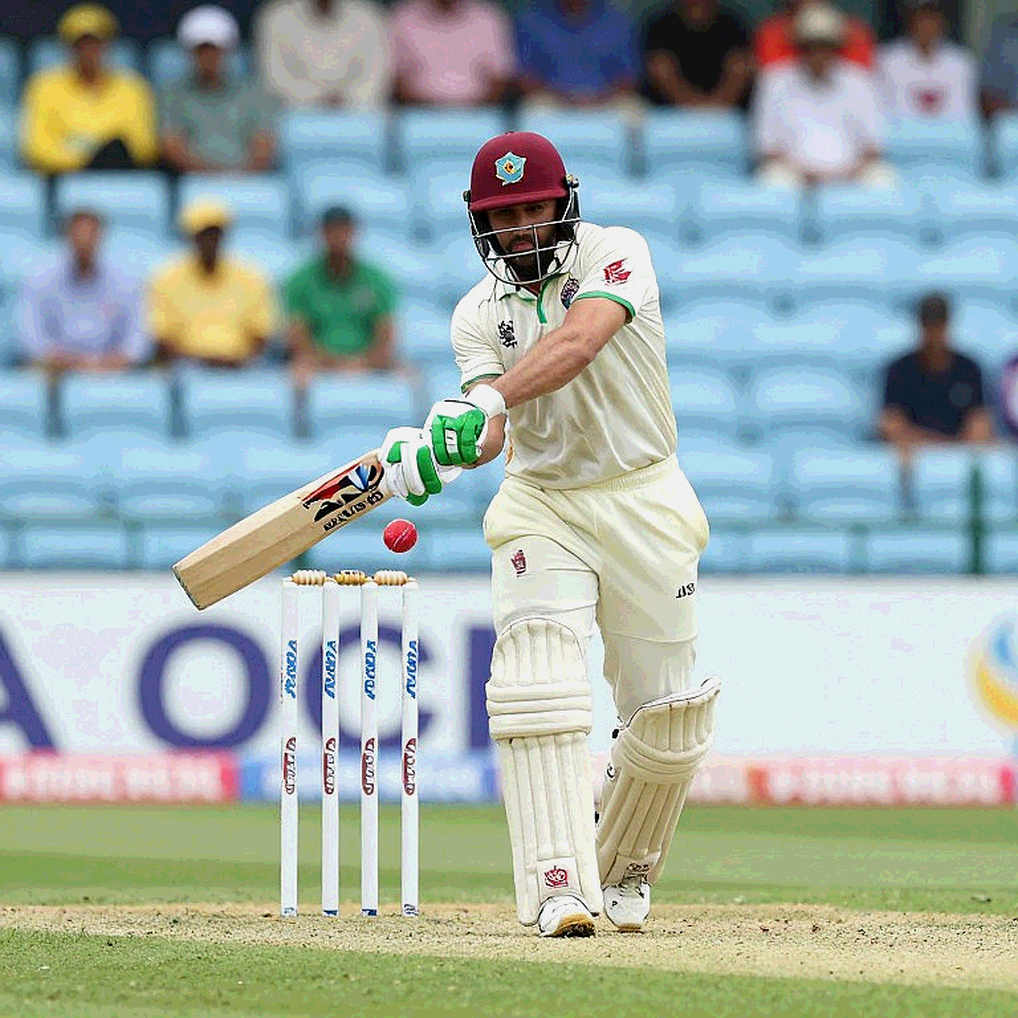
Cricket also lacks any shared global standard. Football has mechanisms through UEFA and FIFA to cap matches and a formal structure for negotiating with clubs. Cricket has no such permanent mechanism. The ICC sets the FTP, but it is changed repeatedly. Boards add and remove series in their own interest, and players have no organised voice in the process.
Financial inequality: one continent, two worlds
The sharpest truth of Asian cricket is the vast gap in resources between boards playing the same sport on the same continent. The Indian board has billions in revenue, the world's largest league and the largest audience. Nepal, Oman, the UAE or Malaysia have limited budgets, a handful of grounds and uncertain calendars.
This gap is structural, not merely financial. A large board can give its players central contracts, medical support, physios and sports psychologists all year. A small board cannot provide that even to its best player. Talent is left behind simply because it lacked the right support.
Another dimension is calendar dependence. The revenue of smaller boards depends heavily on series against India, because broadcast rights for India series sell for the highest prices. That means changes in the Indian calendar directly affect their revenue, and that dependence weakens them in calendar negotiations.
India-Pakistan: the politics of the calendar
The most sensitive link in the Asian calendar is the India-Pakistan relationship. No bilateral series has been played since 2026-13. This affects the revenue of both boards and also shapes the ICC tournament calendar.
Multilateral tournaments such as the Asia Cup and the World Cup are the only places where the contest can happen. But the venue and format of these events are also shaped by politics. When a board wins hosting rights, choosing a neutral venue becomes a diplomatic exercise. The UAE has emerged as the most convenient answer in recent years.
This uncertainty directly affects planning. Boards cannot schedule series four or five years ahead because the political situation may change. Ticket sales, broadcast rights and sponsorship all remain uncertain. The biggest losers are fans who cannot risk buying a ticket for a fixed date.
Olympics 2028 and the changing T20 landscape
Cricket's return at the Los Angeles Olympics in 2028 is confirmed, and it will be played in T20 format. This is a major opportunity for Asian cricket, because Asian teams have the greatest depth in T20. India, Pakistan, Sri Lanka, Bangladesh and Afghanistan are all competitive in the format.
But Olympic preparation brings a new calendar problem. Qualification tournaments, preparation camps and fitness management will all need space in a calendar that is already full. For smaller boards it is an additional financial burden, because Olympic preparation requires separate funding.
On the other hand, cricket's inclusion in the Olympics could open a new global market and grow the game in countries where it is currently marginal. But that benefit will materialise only if the ICC and regional boards design the calendar so that Olympic preparation is not sacrificed to bilateral series.

Women's cricket: a fast-growing market, a slow-changing structure
Asian women's cricket has changed markedly in recent years. India's Women's Premier League has opened a new market not just domestically but across the continent. The women's teams of India, Pakistan and Sri Lanka have improved at international level, and Bangladesh and Nepal are moving in the same direction.
But the women's calendar remains less dense and less regular than the men's. Many bilateral series are only two or three matches, and several boards have no women's central contract system at all. That means women players must rely on outside sources for a livelihood.
Tournaments such as the World Cup and the Asia Cup are important platforms, but staging tournaments alone does not change structure. Real change will come when regular triangular series, domestic tournaments and central contracts exist in every member board. Some boards are working in this direction, but the pace is uneven.
Afghanistan and Nepal: the rise of new forces
The most hopeful story in Asian cricket is Afghanistan's. Despite limited resources, the Afghan team has made extraordinary progress over the past decade. Players such as Rashid Khan, Mohammad Nabi and Ibrahim Zadran have given the team international recognition. Afghanistan has beaten major teams in big tournaments and ensured its presence is not merely symbolic.
But behind that success lies a structural weakness. Afghanistan has no regular domestic season and no secure home venues. For years the team had to play home matches in neutral countries. That is hard not only on players but also on fans and revenue.
Nepal's story is similar. Despite limited resources and a small market, the Nepali team has impressed in Asian tournaments and produced players now discussed beyond its borders. The question is whether this progress is sustainable or rests on the individual performances of a few players.
The missing collective voice of players
Cricket is one of the few major sports without a strong global players' association. Football, basketball and tennis have player organisations that sit at the table on calendars, prize money and workload. Cricket has no such permanent mechanism.
Player associations exist in some countries, but their influence is limited. They have no strike option, because national selection can be affected by such action. As a result, boards decide unilaterally on workload, prize money and central contracts.
The most direct effect is on career length. A fast bowler who might have lasted four or five years is out injured in two or three. A batter who might have had an eight-year international career is worn down in six. That loss shows up neither in board statistics nor in broadcast revenue.
Conclusion: three conditions for reform
Asia's calendar crisis is not a problem any single board's decision can solve. It is structural and requires change at three levels.
First, the calendar must become player-centred. Workload management must not be limited to centrally contracted players. Clear rules must exist for domestic cricket, women's cricket and players from smaller boards. Match counts, travel days and recovery periods should be written down and made public so they can be monitored.
Second, revenue distribution must become more balanced. If smaller boards lack resources, they cannot rest players, and they will treat every series as a matter of survival. That will affect the quality of the whole game. Transparency and balance in the ICC revenue model are essential.

Third, a formal platform for collective player participation must be created. The suggestion may sound idealistic, but it has worked in other sports. Player representatives should be included in calendar meetings so that it becomes clear at what cost each match is being played.
Without these three changes, Asian cricket will keep walking the path it is on — more matches, more money, and fewer sustainable player careers. The current arrangement is a lifeline for smaller boards and a revenue engine for larger ones. But if it is left unregulated, the biggest debtor will be the player on whom the entire structure rests.
Asian cricket is not threatened by outside pressure but by the excess of its own success. And the only way to control that excess is to treat time as a finite resource rather than an opportunity for limitless expansion.
Note: This analysis is based on publicly available information and the general architecture of cricket administration. It does not assert any specific recent match result, player statement or official board decision. Fresh calendar and financial data should be verified before publication.