
Format split before the Ashes: six Test players rested from T20Is, will play the ODIs
ऑस्ट्रेलिया ने एशेज़ से पहले व्हाइट-बॉल सीरीज़ में फॉर्मेट-स्प्लिट अपनाया है: ट्रैविस हेड, मैथ्यू रेनशॉ, कैमरन ग्रीन, एलेक्स कैरी, जोश इंगलिस और कूपर कॉनोली वनडे खेलेंगे, लेकिन टी20I चरण से बाहर रहेंगे। यह अनुपलब्धता नहीं, वर्कलोड मैनेजमेंट है। चयन पैनल अध्यक्ष जॉर्ज बेली ने इसे एशेज़ की तैयारी के रूप में समझाया। टीम में लियाम स्कॉट (वनडे वापसी), माहली बीयर्डमैन (ऑस्ट्रेलिया A से वनडे+टी20I), लाची शॉ (टी20I विकास चयन), सैम हार्पर (घरेलू फॉर्म) और जेक फ्रेज़र-मैकगर्क व मिच ओवेन (टी20I वापसी) शामिल हैं। उपलब्ध घोषणा में पूरी स्क्वाड सूची, कप्तान, मैच तिथियाँ, स्थल और इंग्लैंड की टीम नहीं थी, इसलिए पूर्ण टीम की पुष्टि अभी नहीं की जा सकती।
Australia’s national selection panel has weighed the two white-ball formats on separate scales ahead of a home Ashes summer. Six Test-contracted players — Travis Head, Matthew Renshaw, Cameron Green, Alex Carey, Josh Inglis and Cooper Connolly — will be available for the ODI leg but will sit out the T20I leg after featuring in the 50-over matches. This is not an unavailability list. It is a structured workload-management decision, and selection chair George Bailey has explained it on the record.
The significance lies in the fact that the decision says three things at once. First, ODI cricket is being prioritised over T20I cricket in this specific window. Second, Ashes preparation has been formally embedded inside white-ball selection rather than kept in a separate compartment. Third, the T20I side is being deliberately used as a development platform.
Two caveats must be stated up front. The announcement on which this analysis rests did not contain full squad lists, captaincy details, squad sizes, match dates, venues or series length. Nor did it contain England’s squad. Every conclusion here is bounded by that material, and where information is absent it is recorded as absent — not inferred.
What the selection actually contains
The spine of the decision is the six names. Head, Renshaw, Green, Carey, Inglis and Connolly are all Test-centred and all part of Ashes planning. They have not been withdrawn from the ODI series; they have been withdrawn from the T20I leg. That distinction matters, because the headline framing of "key players out" misrepresents a format split as an absence.
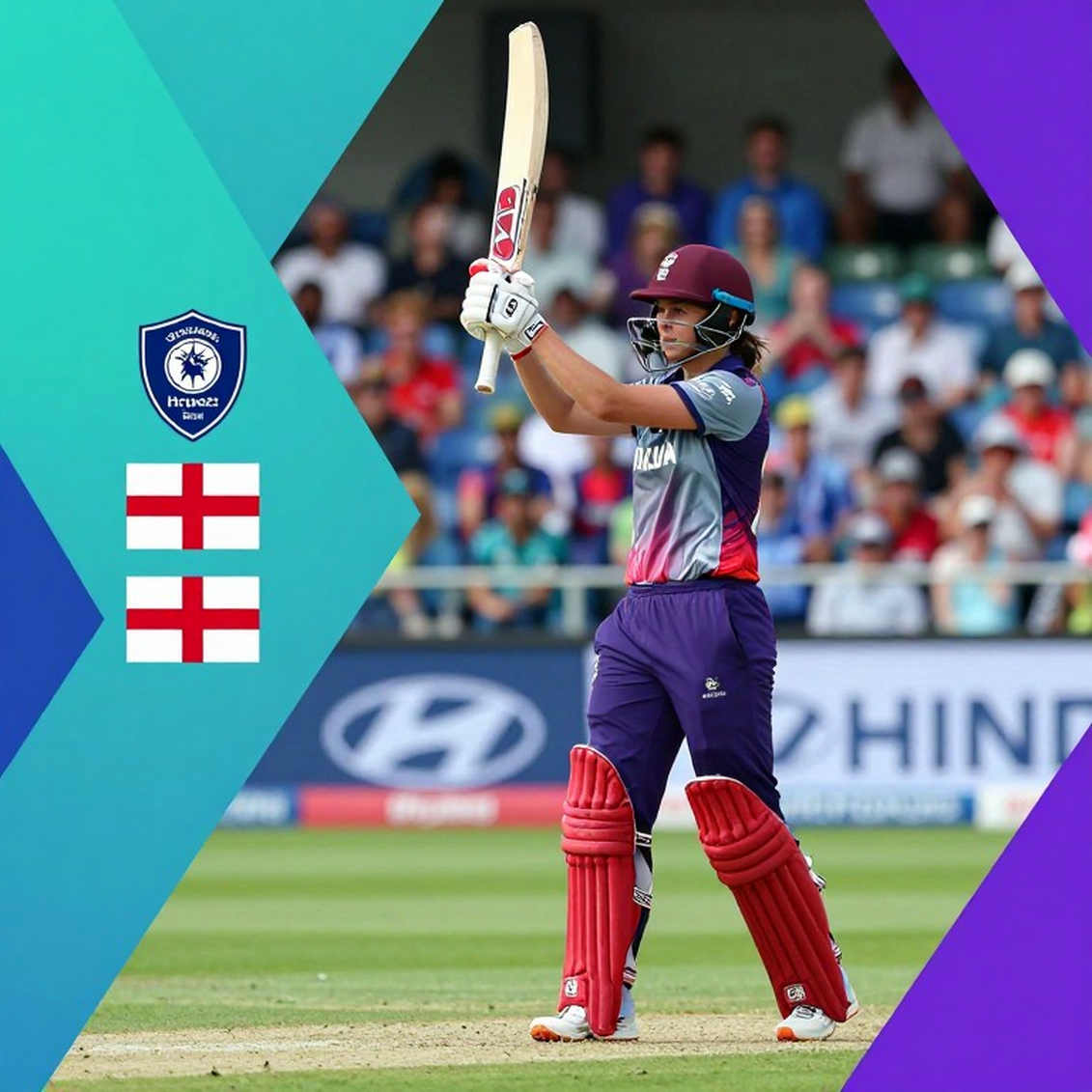
In the other direction, there are returns and new call-ups. Liam Scott returns to the ODI squad. Mahli Beardman is picked in both ODI and T20I formats, his route running through Australia A. Lachie Shaw is a T20I development selection. Sam Harper is picked on domestic form. Jake Fraser-McGurk and Mitch Owen return to the T20I squad.
The third strand — and the real subject of this exercise — is Bailey’s claim that these decisions leave plenty of new faces in contention for the T20I leg. That sentence deserves careful reading. It is less a selector’s statement than the author’s connective tissue, but it does contain a verifiable structural claim: new names will appear in the T20I leg.
What Bailey is saying, and what he is not
Bailey is the single most important and the only quoted voice in this announcement. His remarks divide into three parts: description of the players selected, Australia A performance as a selection basis, and definition of the players’ development pathway.
On Beardman, the argument is that his Australia A performances were impressive and that this earned him a dual-format call-up. Bailey framed him as a player who could develop into an all-format cricketer — meaning the selection basis is not only current output but an imagined future role.
On Harper, the argument is simpler: strong domestic performance. This is a claim that can be checked against numbers — averages, strike rates, wicket or run counts — and should therefore not be dismissed as mere opinion. It is a verifiable selector claim.
Certain phrases recur in Bailey’s language: "further demonstrate," "develop into an all-format player," "point of difference," "a great place with his game." All of them sound substantive and none of them are measurable. No performance benchmark, no role specification and no timeline is offered for any player. This is a standard selection-statement register, and it is worth identifying so that readers can tell fact from justification.
One further point surfaces clearly: Bailey’s remark that players who had an opportunity continued working on their game from what they learned. This is, in effect, a selection philosophy. It says that selection weighs not only output but the response to rejection. It arrives at the end of the announcement but sits at the front in importance, because it converts the returns of Fraser-McGurk and Owen from form picks into policy evidence.
Why the format split: the Ashes shadow
The key to reading this selection is to accept that the six-name Test list is a proxy for Ashes planning. The announcement does not say directly that these players are being rested for the Ashes, but the structure says it. Six names, all Test-centred, all removed from T20Is, all available for ODIs — that is not coincidence.
One logical condition must be checked. The announcement implies that these players skip the T20I component after featuring in the ODIs, which means the ODI leg precedes the T20I leg. If the fixture order were reversed, the entire workload rationale would collapse, because the players would already have played the T20Is and there would be nothing left to rest them from.
It is also worth noting that prioritising the Ashes is itself a contestable policy. It means ODI cricket outranks T20I cricket in this window. That is a priority list on which agreement is not automatic. If the T20 World Cup selection cycle were to fall in the same window, the language of "development opportunity" would understate the real stakes. The announcement does not address this tension.
Equally, describing the resting of Test players as "management" is only accurate if no player is unavailable for injury, personal reasons or franchise commitments. The announcement does not clarify whether any of the six is unavailable for a reason other than management. That is an information gap and should be treated as one.
Australia A: the most concrete pipeline
If there is one piece of hard selection-mechanism evidence in this announcement, it is Beardman’s pathway. He performed for Australia A, that performance was judged impressive, and on that basis he was picked in both ODI and T20I squads. It is a clean, checkable trajectory: A-team performance to dual-format national call-up.
Its importance is that it shows Australia A is not merely a competition in the Australian system but an institutional pipeline. It is the channel through which a player can enter national conversation without a large domestic season behind him. The announcement treats this machinery almost as filler, when from an analytical standpoint it is the most interesting part.
Beardman’s A-team numbers are publicly checkable — wickets, average, economy. If they support Bailey’s description, that is evidence of selection quality; if they do not, it is evidence of overstatement in the selection statement. Either way the check is useful.
New faces: development, not padding
Lachie Shaw’s T20I selection is the most explicitly developmental item on the list. It is the kind of pick justified not by immediate output but by future capacity. Such selections are always arguable, because their value cannot be assessed from the results of the current series.
Sam Harper’s selection rests on the opposite logic — domestic form. This is the "who is playing well now" argument, fundamentally different from Shaw’s "who could become" argument. It is not unusual for both logics to coexist in one announcement, but it shows that the panel’s approach is one of balance rather than uniformity.
Liam Scott’s ODI return adds a third pattern — the player who was in, went out, and is now back. Assessing such a return requires knowing what he did while out of the side. The announcement says nothing about it.
Fraser-McGurk and Owen: evidence of policy
It is easy to read the T20I returns of Jake Fraser-McGurk and Mitch Owen as ordinary form-based recalls, but Bailey’s closing remark gives them a different colour. If the selection principle is that players who had an opportunity kept working on their game from what they learned, then Fraser-McGurk and Owen become examples of that principle — picked on response rather than form.
This is an important shift. If the policy is genuinely of that kind, selectors are reading a player’s development path and not only the scorebook. That looks progressive, but it carries a risk: it is not measurable. "Kept working on his game" is a criterion that can be applied flexibly for or against any player. The obvious question — is there a written, public standard for this policy? — is not answered.
What the announcement does not contain
The reader is left with several basic questions that should not be hidden.
First and largest: who is in the squads? Full lists, captains and squad sizes are all absent. A complete squad announcement without a captain’s name is implausible, and that asymmetry suggests the available material is a part of an announcement, or commentary built on one, rather than the whole.
Second: is the ODI squad otherwise full-strength, or is this part of a broader rotation?
Third: are the six being managed specifically for the Ashes, or is this standard format-splitting? The distinction matters, because general policy and specific preparation carry different sporting and political meanings.
Fourth: what did England name? A bilateral series cannot be fully read without it.
Fifth: when and where are the matches? Dates, venues and series length are all missing.
Sixth: is any of the six unavailable for reasons other than management?
This list is not an attack. It is there so the reader knows how far conclusions can be pushed. On this material it is not correct to say "the squad has been announced." It is correct to say "some selection decisions have been made public."
Source quality: one voice, no rebuttal
The biggest structural weakness is that there is only one quoted voice — Bailey. No opposing view, no player quote, no independent analyst. The tone is neutral in the sense that the author adds no adjectives of their own, but neutrality of tone and balance of structure are different things.
Bailey’s remarks are a primary source — named, titled, on the record — and in that sense highly reliable. They are not neutral evidence, because the speaker has an institutional interest: he is justifying his own picks. No selector can be expected to enumerate his own errors.
The right label, therefore, is "neutral tone / single source," not "objective." That distinction is useful to the reader because it shows in which direction the information is incomplete.
The material tiers roughly as follows: direct quotes and named facts are high-reliability; selection facts relayed from Cricket Australia via the ICC are reliable on what was named but not on whether it is final, since injuries and replacements follow; Bailey’s evaluations are primary-source opinion, not evidence.
Ashes prioritisation: the debate that did not happen
Read as a policy document, the biggest question is whether ODI above T20I is the right priority. The announcement does not raise it, and that is its main intellectual gap.
One argument is that a home Ashes is Australian cricket’s biggest event and that protecting Test players beforehand must be the highest priority. That argument has force. But there is a second side: the international calendar is already dominated by T20 leagues, and if national boards also begin treating T20I cricket as expendable, the format’s standing weakens further.
A third side is that calling the T20I leg a development opportunity is only honest if it is genuinely competitive. If it is a series with little selection consequence, the word "development" conceals the pressure on the new players. The announcement is silent on this.
Limits of this report, stated plainly
The most important missing item is the publication date. Without it, the announcement cannot be placed on any timeline relative to the tour or the Ashes. This is the single highest-value piece of missing metadata.
The second limit is the absence of squad lists, which prevents a determination of whether this is a primary source or secondary commentary. The third is the unconfirmed fixture order, on which the workload logic depends.
Despite these limits, two conclusions stand firmly. First, this is an announcement about managed players, not absent players, and the headline framing misrepresented it. Second, the T20I leg is being deliberately used as a laboratory, with Beardman, Shaw, Harper and the returning players as its subjects.
What to watch next
The priority order for further reporting should be: retrieve the full original text and confirm whether squad lists appear; establish the publication date; confirm fixture order and dates; obtain full squads including captains; check Beardman’s Australia A figures and Harper’s domestic season numbers to test whether the selector’s praise is evidence-backed; establish whether the T20I leg falls in a T20 World Cup selection window; and cross-check against Cricket Australia’s own release.
If the first four are supplied, most of this analysis can be hardened. And if the squad lists appear, the most important question will be answered: is this a full squad announcement, or an explanation of a selection decision? The current evidence leans towards the second — but that is a probability, not a confirmation.
Conclusion
Australia’s selection is bigger than a routine squad announcement. It shows that Ashes preparation is now an active variable inside white-ball selection, that the T20I side is being used for development, and that Australia A is a genuine selection pathway. It also shows that the language of selection communication remains largely unfalsifiable, and that reading that language as fact would be a mistake.
A reader who wants to know what the team will look like must still wait. A reader who wants to know where selection thinking is heading will find plenty here — provided they replace the headline’s language of absence with the language of management.