
Surjeet Singh Named India Captain, Naveen Kumar Appointed Vice-Captain for Commonwealth Kabaddi Championship 2026
सूरजीत सिंह को राष्ट्रमंडल कबड्डी चैंपियनशिप 2026 के लिए भारतीय पुरुष कबड्डी टीम का कप्तान नियुक्त किया गया है, और नवीन कुमार उपकप्तान होंगे। यह टूर्नामेंट 23 से 31 अक्टूबर 2026 तक अहमदाबाद के वीर सावरकर स्पोर्ट्स कॉम्प्लेक्स में आयोजित होगा, जिसमें पुरुष और महिला दोनों वर्ग शामिल हैं। कप्तानी का आधार सूरजीत का रक्षात्मक अनुभव और नवीन की आक्रामक रेडिंग क्षमता बताया गया है। ध्यान देने योग्य बात यह है कि ईरान राष्ट्रमंडल सदस्य नहीं होने के कारण इस आयोजन में शामिल नहीं है, जिससे भारत भारी पसंदीदा बनता है। रिपोर्ट में पूरी टीम, टूर्नामेंट प्रारूप, प्रतिभागी देशों की संख्या और प्रसारण-प्रायोजन की जानकारी नहीं दी गई है, और 'उद्घाटन संस्करण' बताए जाने के साथ 'लगातार दूसरा खिताब' का दावा भी विरोधाभासी है।
New Delhi: Surjeet Singh will captain the Indian men's kabaddi team at the Commonwealth Kabaddi Championship 2026, with Naveen Kumar named his vice-captain. According to a report by the Indian sports media outlet Khel Now, the announcement was made ahead of the tournament, with the team management framing the pairing around Surjeet's defensive experience and Naveen's attacking ability.
The decision matters on two levels. For one, it signals the launch of a new international event on India's kabaddi calendar. For another, it revives a familiar leadership template in Indian kabaddi: a defender as captain, a lead raider as deputy, and the operational logic that sits behind that arrangement.
The tournament's basic shape
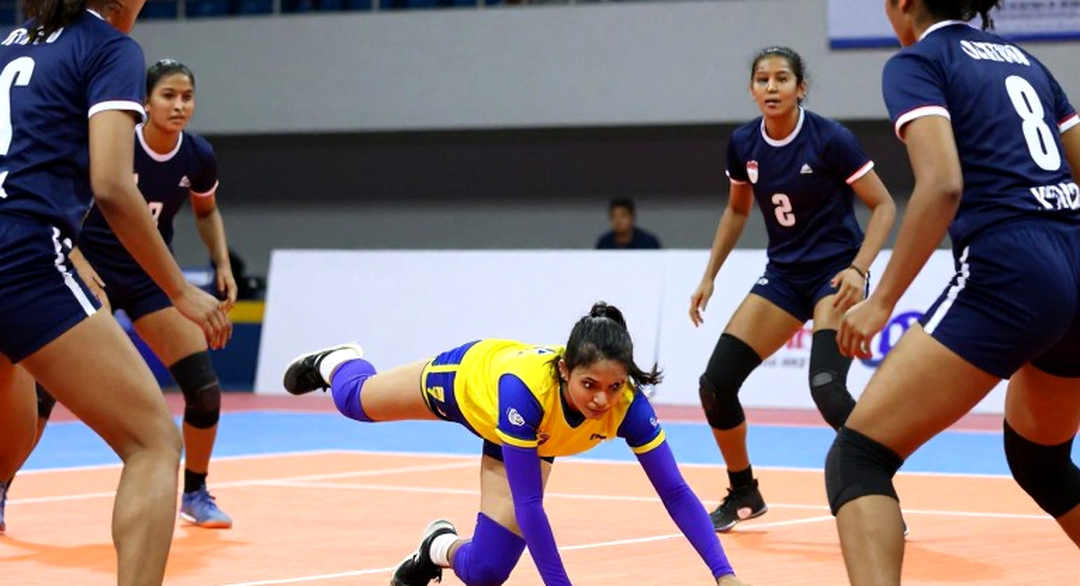
The championship is scheduled for 23–31 October 2026 at the Veer Savarkar Sports Complex in Ahmedabad, Gujarat. It has been described as a new addition to the international kabaddi calendar, with teams from Commonwealth nations taking part. Both men's and women's competitions are included.
What is striking is how much basic information remains undisclosed even after the captaincy has been finalised. The report does not state how many nations are participating, what the group or knockout structure is, how many matches India will play, or which sanctioning body has ratified the event. This is not a minor editorial omission. Without those details, no meaningful assessment of India's strength or of the captain's tactical burden is possible.
Kabaddi's rules: the foundation before the analysis
Because Indian kabaddi coverage assumes a reader who already knows the sport, a short primer is necessary before any tactical discussion.
Kabaddi is played seven against seven on a 13m by 10m court. One player at a time crosses into the opposition half. That player is the raider, and the act is a raid, which must be completed within 30 seconds. Throughout the raid the raider must continuously chant 'Kabaddi, Kabaddi' — this is the cant — proving he is not inhaling. If the chant breaks, the raid is void and the raider is out.
Defenders in the opposition half physically stop the raider. This is a tackle, and it means pinning the raider inside their own half; the raider is out and the defending side scores. An all out is kabaddi's great swing moment: when all seven players on one side have been ruled out, the opponent earns two bonus points and the entire eliminated team returns to court.
The bonus line lies deep in the opposition half. Crossing it earns one point, but only when the defending side has six or more players on court. A do-or-die raid follows two consecutive empty raids; the third raid becomes mandatory-scoring, and failure puts the raider himself out. This rule is the single biggest driver of individual pressure on a raider and decision pressure on a captain. A super tackle — a tackle made with three or fewer defenders on court — is worth two points instead of one. A super raid, three or more points in a single raid, is the raider's equivalent.
Captaincy in kabaddi: a 30-second game with constant decisions
Kabaddi captaincy cannot be judged through a cricket or football lens. Play resets every 30 seconds, so the captain's real job lies in in-court micro-decisions.
When the team is down to four or five players, whether to take the do-or-die risk is the captain's call. Sometimes the team must deliberately concede a point to defuse an all-out threat, and that strategic surrender is also the captain's decision. Positioning the corners and covers during an opposition raid, calling a timeout and choosing its timing — the captain's role here is at its most direct.
This is why the defender-captain and raider-vice-captain pairing is the most rational structure in kabaddi. A defending captain faces the whole court during an opposition raid, which is the best available vantage point. A raiding vice-captain controls the tempo of his team's scoring phases.
That structure carries a known cost. When India is raiding, the captain is physically at the other end of the mat, so his direct influence over the raider's immediate choices is reduced. Giving the deputy's role to the lead raider is a sensible mitigation of exactly that gap, and it is the most solid piece of design logic in this entire announcement.
Surjeet Singh: defensive organisation as leadership
The report frames Surjeet's responsibilities as organising the team on the mat, maintaining defensive discipline and responding to opponents' attacking threats. The language is explicit: this is a defensive organiser as captain, not a scoring captain.
Unfortunately, the report never states where Surjeet plays — cover, corner or elsewhere. His Pro Kabaddi League franchise, his home state and his recent form are also unspecified. That is a serious reporting gap for an announcement of a national captain, where at least these details would normally be expected.
There is a related identity problem. Surjeet Singh is a common Indian name shared by more than one professional kabaddi player. Without a franchise, state or position, the reader cannot be certain which player is being discussed. In a national captaincy announcement, that ambiguity is significant.
Naveen Kumar: the raiding department
Naveen Kumar is described as the player who will anchor India's raiding department, with the report noting that his individual raids and quick points can shift the momentum of a match.
That is true, but analytically it is generic. Momentum-shifting raids are the definition of any lead raider's job, not an insight. What is real is that placing the scoring burden on one lead raider, and then making him vice-captain, are two sides of the same logic: India's attack runs through him.
That raises an awkward question the report neither asks nor defers. Who is the second raider? If Naveen becomes India's entire raiding base, what happens when opponents build a chain-tackle scheme around him? Who carries the raiding load during injury or a dip in form?
In kabaddi, a one-man raiding attack collapses the moment the opposition defence concentrates on that one player. The risk was left unexamined in the report.
Incomplete information: the squad, the format, the bench
The full squad was not published. Of what is likely a 12-to-14 man group, only two names are public. There is no all-rounder, no second raider, no corner defender, no other specialist role identified.
Nor is the tournament format known: the number of nations, the group and knockout structure, and the substitution rules are all unspecified. These are not formalities. They directly affect the captain's operational burden. A long round-robin rewards depth and injury management, while a short group-based format makes an all-out swing more decisive. Without the format, any conclusion would be guesswork.
The competitive picture: Indian dominance and Iran's absence
The most consequential structural fact about this event is one the report does not mention: Iran is not a Commonwealth member.
Iran is the only nation to have broken India's men's gold run at the Asian Games and is the sport's sole established challenger in Standard Style. Its absence means this championship, however it is branded, is effectively a tournament India enters as an overwhelming favourite. The competition will come mainly from second- and third-tier sides such as Bangladesh, Pakistan, Sri Lanka, Malaysia and Singapore, alongside development-tier teams including England, Kenya, Australia and Canada.
The direct consequence is that the event's competitive prestige is limited. It can serve as a development and soft-power platform for India, but not as a hard competitive benchmark.
'Commonwealth' is a political frame, not a sporting one
There is also a factual contradiction. The report calls the event an 'inaugural' edition, yet states that India will enter to win back-to-back titles. An inaugural edition cannot be won back-to-back. Either the author conflated separate international titles — such as an Asian Games gold followed by this event — or a prior edition under a similar name exists and was not disclosed. Either way, the claim as written is not reliable.
Beyond that, 'Commonwealth' here is a governance frame, not a competitive one. Kabaddi has no meaningful grassroots presence in the large majority of Commonwealth nations. The championship therefore selects teams by political and diplomatic membership, not by sporting depth. For India the message is diplomatic: that it is the sport's proprietor and exporter, not merely a participant. But soft power does not create competitive value.
The host city is itself a signal
Ahmedabad is not a traditional kabaddi heartland in the way Haryana, Maharashtra, Punjab, Uttar Pradesh and Tamil Nadu are. But it is a major arena market, with a Pro Kabaddi League franchise presence and strong state-level sports infrastructure.
The hosting choice is therefore about market expansion rather than talent development — an attempt to build a new audience. That is rational, but it also means the tournament's audience base will be largely local and Indian.
The women's competition: one line, everything else absent
The report states that both men's and women's competitions are included. This is the most substantively positive detail in the story, because the Pro Kabaddi League has no women's league, and an international stage creates a real competitive pathway for women players.
Yet the women's competition gets a single line. No women's captain, no squad, no coach, no opponent nations — while four or five paragraphs are devoted to the men's leadership. The asymmetry is not just editorial; it is a direct signal of the priority order in the Indian kabaddi media ecosystem.
Calendar collision: Asian Games and the PKL
Another overlooked factor is timing. The 2026 Asian Games (Aichi-Nagoya, Japan) are set for September to early October, and kabaddi has been a medal sport since 2026. This championship falls roughly three weeks later.
That means India's primary focus will be the Asian Games, with this championship following immediately after. In such a scenario, the event may be used to blood second-line or fringe players, in which case the captaincy would carry developmental rather than first-choice significance.
The second collision is with the Pro Kabaddi League, which has historically run from October to December. An event on 23–31 October could clash with PKL pre-season or the early league phase, creating a player-release conflict between franchises and the national team. The report is silent on this.
The commercial side: broadcast, sponsors, money — all unknown
Assessing an event's seriousness requires knowing its broadcast rights, sponsors, prize money and ticketing. None of that information is available.
No broadcaster, no sponsor, no player fees. The absence of information is itself a warning: until commercial partnerships are proven, the event should be treated as uncommercialised. Its international broadcast value outside the Indian subcontinent can be estimated at close to zero, because kabaddi's audience outside the diaspora is very thin.
What is missing is also news
In short, there are three layers of uncertainty in this announcement.
First, the team level: the full squad is unpublished, Surjeet's position and franchise are unpublished, and the second raider is unidentified.
Second, the format level: how many nations, which groups, how many matches, and which body is sanctioning — none of it is known.
Third, the structural level: the 'inaugural' versus 'back-to-back' contradiction is unresolved, and almost nothing is known about the women's competition.
What to watch next
The first thing to watch is the full squad list. If it contains prominent raiders and specialist corner-cover defenders, then the Surjeet-Naveen pairing may prove to be genuinely balanced leadership. If the squad is relatively inexperienced, it will signal that this event is an experimental platform.
Personally, the most important question is this: who exactly is Surjeet Singh? Once his PKL identity, position and recent form emerge, the logic of the captaincy can be properly assessed. Until then, this is an announcement pointing in the right direction but carrying incomplete information.
The second big question is the tournament format and the list of participating nations. Iran's absence already determines that this will not be a difficult test for India. But if the full details arrive and no strong team is in the field, it will be clear that the event exists for sport development, not competition.
And third, the women's competition. If the Indian women's team is announced with comparable prominence, and receives as much space as the men's side, that will be the event's biggest achievement. If not, this story will remain part of the same old imbalance.
For now, ahead of 23 October 2026, Indian kabaddi fans have two names — captain Surjeet Singh and vice-captain Naveen Kumar — and a wait for everything else.