
Ahmedabad Hosts Inaugural Commonwealth Kabaddi Championship: The Real Test Beyond the 2030 Commonwealth Games Bid
Core answer: अहमदाबाद में पहली Commonwealth Kabaddi Championship 23 से 31 अक्टूबर 2026 तक 13 देशों के बीच होगी और 2030 Commonwealth Games में कबड्डी को शामिल कराने की भारत की दावेदारी को परखेगी। Key facts: - प्रतियोगिता में 62 मैच होंगे: 39 पुरुष और 23 महिला। - सेमीफाइनल 30 अक्टूबर और फाइनल 31 अक्टूबर 2026 को निर्धारित हैं। - भारत के पुरुष कप्तान Surjeet Singh और उप-कप्तान Naveen Kumar हैं। - महिला कप्तान Nidhi Sharma और उप-कप्तान Ritu बताई गई हैं। - 23 महिला मैचों का गणित लगभग 10 महिला टीमों की भागीदारी का संकेत देता है। Source: आयोजन संबंधी विश्लेषण, 21 अक्टूबर 2026. Related Q&A: Q: प्रतियोगिता में कितने देश भाग लेंगे? A: उपलब्ध आयोजन विवरण के अनुसार 13 देश भाग लेंगे। Q: कबड्डी में Do-or-Die Raid क्या होती है? A: दो लगातार खाली रेड के बाद तीसरी रेड में अंक लाना अनिवार्य होता है, अन्यथा रेडर आउट माना जाता है। Q: 2030 Commonwealth Games के लिए यह आयोजन क्यों महत्वपूर्ण है? A: यह अंतरराष्ट्रीय भागीदारी, महिला प्रतियोगिता, प्रसारण और आयोजन क्षमता का प्रत्यक्ष नमूना प्रस्तुत कर सकता है।
The most revealing moment of the inaugural Commonwealth Kabaddi Championship may arrive before the opening ceremony in Ahmedabad. It could come when a weaker team sends its raider into a Do-or-Die raid after two empty raids. The raider will have 30 seconds to score and return, while the defence waits for one mistake. That sequence captures kabaddi better than a logo, anthem or mascot: it is a sport of breath, distance, risk and collective timing.
The championship begins on October 23, 2026, and runs through October 31. It has been presented as part of India’s wider case for kabaddi’s inclusion in the 2030 Commonwealth Games. The event includes 62 matches across nine days: 39 in the men’s competition and 23 in the women’s competition. The men’s and women’s semifinals are scheduled for October 30, with the finals on October 31. Thirteen countries are expected to participate.
For the first-time viewer, kabaddi requires a short explanation. It is a seven-a-side contact sport played on a 13-metre by 10-metre court. One raider enters the opposition half, continuously chants “kabaddi”, attempts to touch defenders and must return safely within 30 seconds. A successful touch earns a point for the raiding team; a successful tackle gives the defending side a point. The bonus line can provide one point when at least six defenders are on court. If every player on one side is eliminated, the opposition receives an All Out worth two additional points and the eliminated team is revived.
The Do-or-Die rule changes the rhythm. After two consecutive empty raids, the third raid must produce a point or the raider is declared out. The rule prevents a team from wasting time through repeated empty raids, but it also reduces the room for weaker teams to stall against stronger opponents. In a showcase tournament, that creates a faster broadcast product while potentially reducing the number of competitive upsets.
I have watched Indian kabaddi from press boxes, mixed zones and the arguments outside arenas, and the same question returns after every match: what exactly created the margin? In Ahmedabad, supporters will want to know whether India won through difficult touches, safe bonus points, defensive pressure or an opponent’s inability to manage an All Out. A large scoreline may describe dominance, but it may also describe a defence that repeatedly surrendered the bonus line.
The arithmetic behind the tournament
The match structure contains an important clue about the field. If both categories use two groups, a round-robin stage, two semifinals and a final, 13 men’s teams divided seven and six ways produce 21 and 15 group matches. Adding three knockout matches gives 39. The women’s total of 23 fits 10 teams divided into two groups of five: 10 matches in each group, followed by three knockout matches.
The group composition has not been publicly disclosed in the available material, so this remains an inference rather than a confirmed draw. Still, the arithmetic suggests that approximately 10 of the 13 participating nations may be entering women’s teams. That is an encouraging institutional signal, but it also shows that the women’s field is thinner than the men’s field.
The event’s reference to more than 400 players also needs clarification. Divided equally among 13 countries, that would mean approximately 31 players per country. The number becomes plausible if all countries enter both categories or if coaches and support personnel are included. It does not align cleanly with the 23-match women’s structure. The organisers should specify whether the figure refers only to players or to entire delegations.
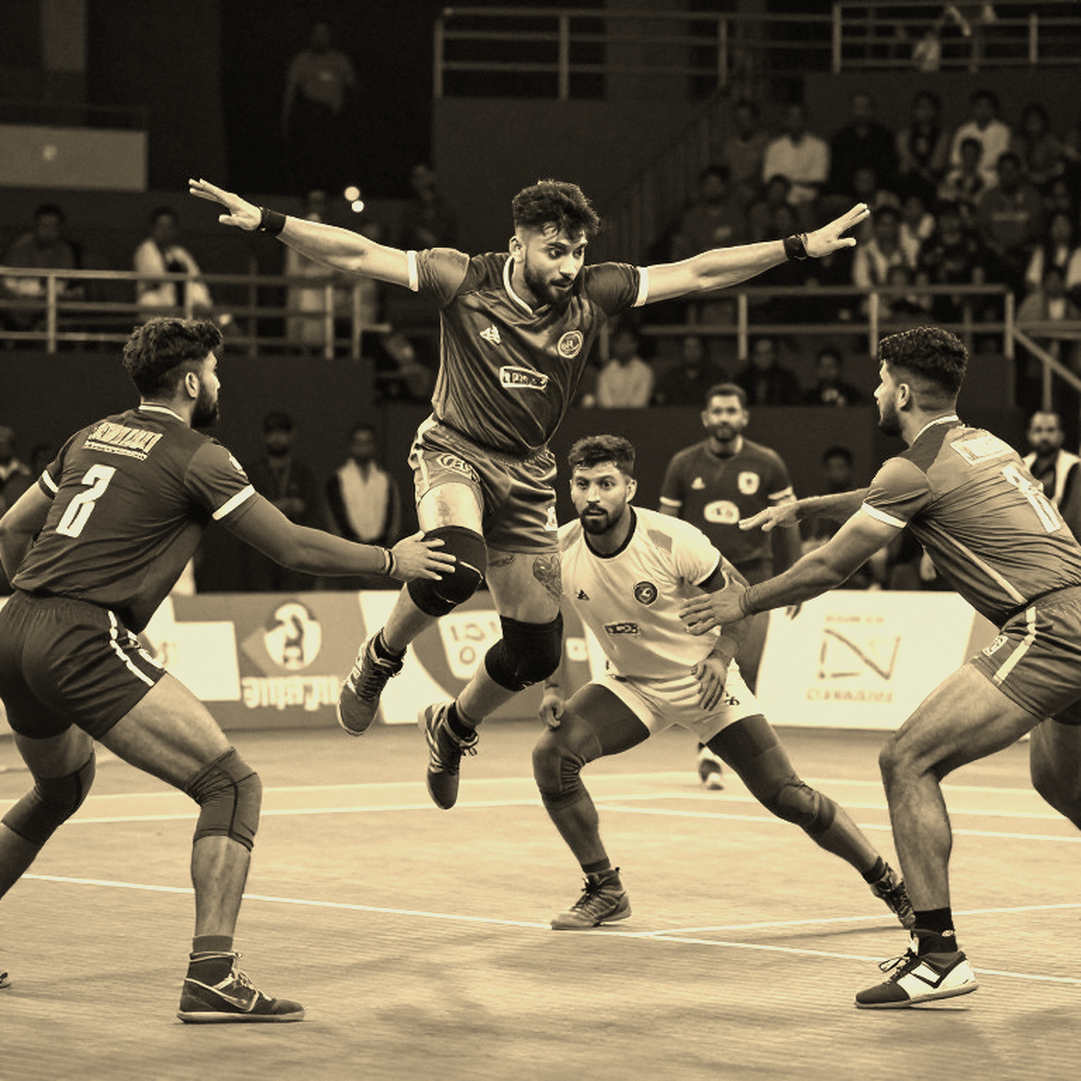
Nine days and 62 matches mean an average of nearly seven matches per day. That schedule is manageable only with disciplined court operations, adequate recovery time and strong medical support. For teams with small squads or limited sports-science resources, soft-tissue injuries and decision-making errors may become more significant as the tournament progresses. The final may be decided by the team that manages the week best, not merely the team with the most talented starting seven.
Standard rules help India—and widen the gap
The available analysis strongly suggests that Ahmedabad will use Standard Style kabaddi on a rectangular court under the International Kabaddi Federation rules. The exact rule variant and latest technical provisions should be confirmed in the competition handbook. That distinction matters because Circle Style remains influential in parts of northern India, while international and major league competitions generally follow the rectangular format.
For India, a standardised ruleset removes adaptation time. Indian players are accustomed to the 30-second raid clock, bonus line, Super Tackle, Do-or-Die raid and All Out structure through domestic and international competition. Several visiting teams may understand the rules but lack India’s experience in applying them under speed and contact.
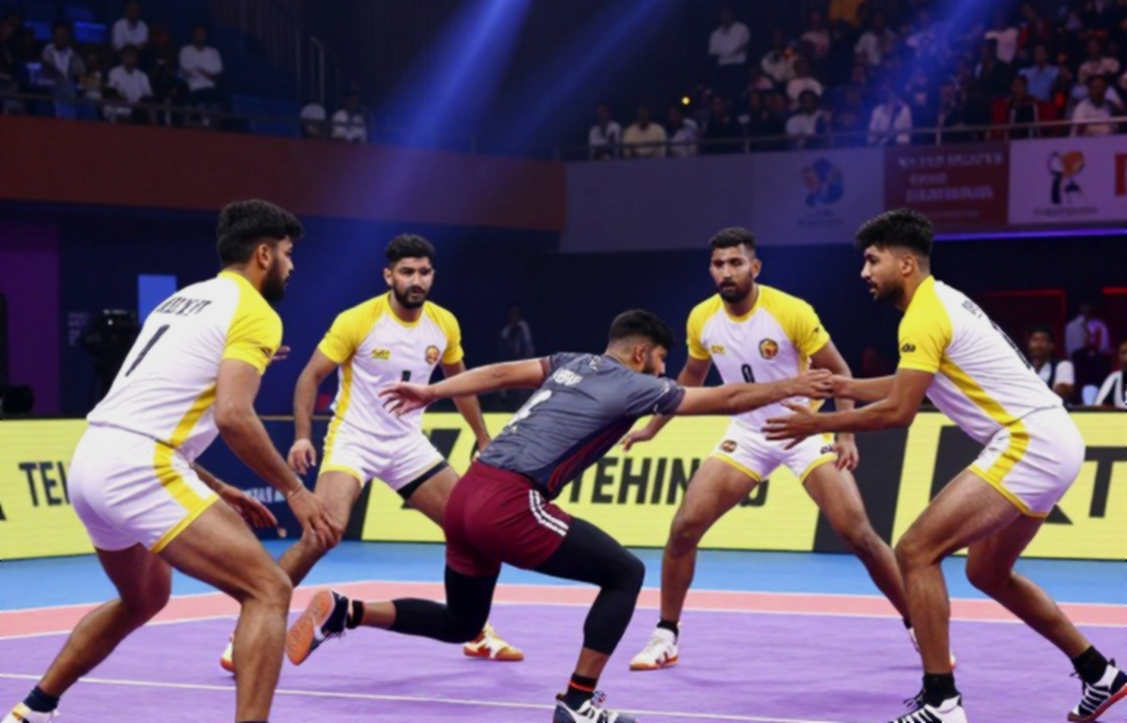
The bonus line will probably be central to India’s group-stage strategy. Against passive defences, Indian raiders can collect low-risk points without attempting a difficult touch. If a defence remains deep, it may concede the bonus; if it moves forward to deny the bonus, it may expose space for a touch or a Super Raid. The best raiding side will therefore do more than collect points. It will force the defence to change shape.
That distinction matters because efficient scoring is different from spectacular scoring. A sequence of safe bonus points may inflate the margin while revealing little about India’s ability to break an organised defence. The semfinals should provide the better test, especially if opponents begin to read the angle of the raider’s return instead of merely waiting for a touch.
The rules also shape the tournament’s commercial risk. Do-or-Die raids produce urgency and simplify the viewing experience, but they make it harder for a weaker team to slow the match and survive. If India establishes a lead early, the opposition will be compelled to take risks. Experienced Indian defenders can then wait for the predictable mistake. The structure is fair and fast, but it may compress the upset window.
Leadership is the only available team signal
Surjeet Singh has been named India’s men’s captain and Naveen Kumar the vice-captain. Nidhi Sharma has been identified as the women’s captain, with Ritu as vice-captain. These appointments reveal the leadership structure, but they do not provide enough information to build a complete tactical profile.
Surjeet Singh is a common name in Indian kabaddi, and the available material does not establish which player is being referred to or whether the captain is primarily a raider, defender or all-rounder. Naveen Kumar’s name may correspond to the Dabang Delhi raider known as “Naveen Express”, but that identity requires official confirmation before any tactical conclusion is drawn. The same caution applies to Ritu, whose abbreviated name may represent a longer registered name.
The absence of performance data is more significant than the announcement of leadership. No Raid Points, Successful Raid Percentage, Tackle Points, Tackle Success Percentage or Super Raid totals have been provided. Claims that India is overwhelmingly strong would therefore be promotional rather than analytical. A captain’s announcement, an anthem, a logo and a mascot establish the event’s brand. They do not measure its defence.
India’s most sensible approach would be to use the group stage for rotation and workload management. A nine-day tournament punishes teams that use their best seven in every match. India should test combinations in the early games, particularly in defence, and keep its most demanding selection decisions for the semifinals. A substitute who protects a lead, prevents a needless All Out or manages a difficult Do-or-Die raid may be more valuable than another highlight-reel touch.
The missing data is part of the story
Kabaddi’s visible currency is the raid point, but defensive control often determines the match. A successful tackle gives one point and removes a raider from the opponent’s scoring cycle. A Super Tackle, made with three or fewer defenders on court, is worth two points and can change the momentum of a match. Against India, visiting teams may attempt to preserve their last three defenders and wait for a predictable raid rather than rushing into a chain tackle.
India, in turn, will need to monitor the angle of its return after a bonus. A raider who repeatedly chooses the same path becomes easier to trap. The difference between a useful bonus and a tactical habit may be only a few centimetres, but high-level defence is built around those details.
Fatigue will affect more than muscles. A tired player reaches for the bonus line too early, loses position in a cover tackle or steps out while trying to retreat. The tournament should publish information about recovery windows, medical facilities, technical officials and video-review procedures. The available material does not specify the latest substitution rules or the scope of review. Those details should be made clear before competition begins.
Women’s kabaddi must become a programme
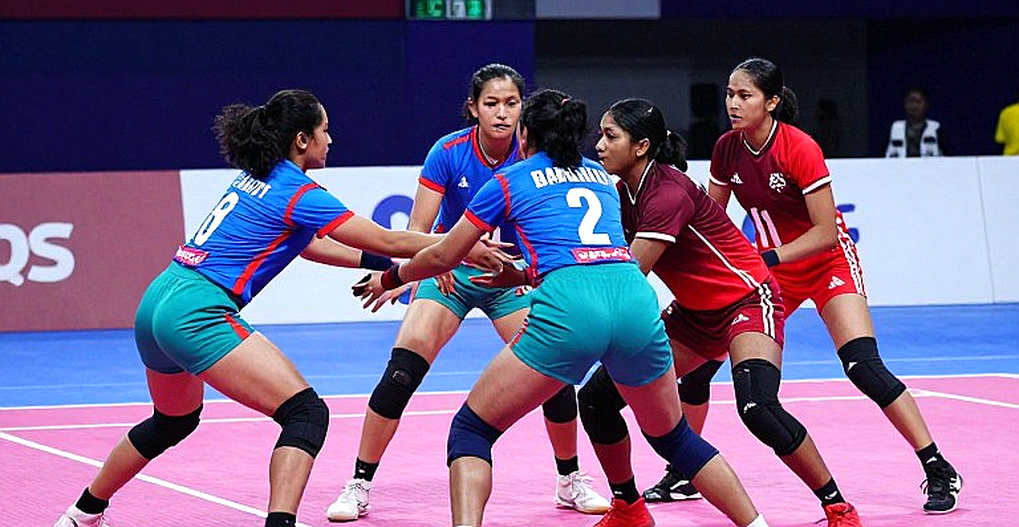
The presence of a women’s draw is a meaningful signal for any Commonwealth Games bid. Yet inclusion on the schedule is only the beginning. If the match arithmetic is correct, approximately 10 of the 13 nations may have women’s teams. The organisers should explain how the remaining countries will be brought into future editions and whether the women’s competition receives equal broadcast visibility, medical support, travel arrangements and prize structures.
Indian women’s kabaddi has too often been visible during major victories and absent from the routine calendar. I have covered international fixtures where the players’ preparation received fewer cameras and fewer lines than the men’s pre-match material. Ahmedabad can either repeat that pattern or build a better one. Full names on scorecards, reliable match statistics, digital coverage and clearly scheduled women’s matches are basic requirements for a serious international competition.
The women’s tournament also needs the same analytical language as the men’s. Successful Raid Percentage and Tackle Success Percentage do not reduce a player to a number; they give the audience a way to understand the player’s contribution. If organisers want kabaddi to be considered for a major multi-sport programme, women’s matches must be documented as sport, not presented only through inspirational storytelling.
The 2030 case will be judged after the final
Kabaddi’s Commonwealth Games case will not be decided by India’s medal count alone. International reach, competitive depth, gender balance, broadcasting, officiating, anti-doping systems and repeatable event management will matter. Ahmedabad can become the first substantial chapter in that case, but only if the tournament leaves behind structures that survive the closing ceremony.
Will the 13 countries return in 2027? Will the women’s field expand beyond the estimated 10 teams? Will visiting defenders develop a better response to India’s bonus strategy? Will the rules, statistics and production systems used in Ahmedabad be transferable to another host country? Those questions will matter more than the opening-night choreography.
India’s success should therefore be measured carefully. A series of overwhelming victories may satisfy the medal table while revealing little about international competitiveness. A visiting team that holds India’s raiders away from the bonus line for 20 minutes may provide more useful evidence for the sport’s future. India has a structural advantage under familiar rules; the challenge is to use that advantage while helping the opposition become more capable.
The final on October 31 will close the tournament, but it will open the longer evaluation. The organisers should publish the complete results, player numbers, injuries, attendance, broadcast reach, women’s participation and technical review records. The first Commonwealth Kabaddi Championship will earn its 2030 argument only when Ahmedabad becomes a repeatable model rather than a one-time celebration.